New Year: New Disorder

You know what’s better than coming up with New Year’s Resolutions? Adopting an obsessive compulsive disorder and disguising it as art.

As someone who spent the first two days of 2012 spending more than she could afford on food and alcohol, I can support the gesture of giving significant slack to your best intentions, championed here by Gothamist. Why should I be ashamed of my undesirable behavior when I can justexpect less of myself, as Oprah suggests? But to be honest, I’m just not interested in improvements that are so damned reasonable. Achievable resolutions feel like the boring tedium of becoming someone who is well-adjusted.

In my quest for a little New Year’s something to tickle my fancy—to take advantage of the promise and optimism inherent in a brand new year—I ran across a tidbit in Ruth Franklin’s Literary Resolutions in the New Republic that left me utterly inspired. Peter Dreher is an artist who paints the same water glass every day and now has over 2,500 paintings of this water glass. This exercise has incredible artistic and philosophical consequences, much of which is discussed in this interview with Lynne Tillman over at BOMB.

For me, the repetition and the obsessive nature of the exercise (the water glass is always on the same white table in a white room; the perspective and frame are uniform) make the perfect grounds on which to perform awesome, if not meaningful, resolutions.

Instead of resolving to keep in better touch with family and friends, why not resolve to write a letter every day to the same person you don’t know very well? Instead of resolving to hear more music, why not resolve to listen to the same song every day at the same time of day? Instead of eating healthier, why not try to draw a piece of crumpled white paper that you then re-crumple and draw again the next day?

The possibilities are endless. What’s important is to do something obsessively, with precision and care to maintain a particular sameness, every day. The accumulation, whether it be of particular objects or simple experience, would inevitably reveal something. And even if the exercise fails artistically, there is still the pure satisfaction of daily work.

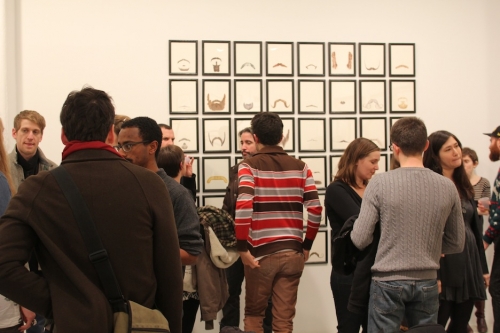
Photo: Monique Knowlton Gallery via bombsite.com

Read More
Juvenilia Marginalia
January 06, 2012

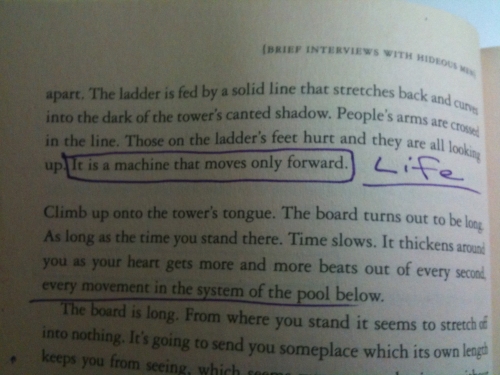
The inner blogosphere of Black Balloon has been abuzz with fake authorial gushiness versus real teen gushiness versus the gush-worthiness of David Foster Wallace faking out teens for real. And this past week, when a package of my old books arrived from my mom, complete with my own teen copy of Wallace's Brief Interviews with Hideous Men, all three confluenced in a cosmic and darkly underscored conclusion.

Read More
James Franco, Charlotte Bronte, Etta James

Could it be opposite day? Jocks are becoming nerds!

James Franco is flunking acting class!

But back in the normal world, Charlotte Bronte is still the most popular of her sisters

Nerds are pleased with the latest Batman trailer

And the masses have replaced planking with avocado-ing

Writers aren't having much luck though, as poet Carl Sanburg's home is being foreclosed

And Maya Angelou calls out Common for being "vulgar and dangerous"

While the writing world experiences a dearth of scathing wit with Christopher Hitchens's death

Similarly, The music world may soon be without the legendary talent of Etta James as well

World leaders have also been in the obits lately, with the deaths of Kim Jong-Il and Vaclav Havel

But there was one bright note this week: Aragorn has started his own indie publishing press!

Photo Source

Read More
Weird Words: Thoughts on Wambles, Ferrules, and Desire Paths
December 22, 2011

Where do the weird words of our world fall within the approval matrix of today’s writers? Do words like “lunule” (the ivory crescent of a fingernail tip) and “gynecomastia” (man boobs) poeticize or demystify the peculiarities of everyday life? In short, is obscure vocab savvy an in or an out?

Read More
Mutton Chops and Monologues: A Recap of Our First Reading
December 20, 2011

Is it self-destructiveness or something worse that compels me to start off a post about Black Balloon's first reading, an evening of facial hair-inspired fiction that (full disclosure) I helped put together and (fuller disclosure) I also read at, by saying that I'm not the biggest fan of literary readings?

Read More
Gervais, Turing & Follow-Through Remorse
December 15, 2011

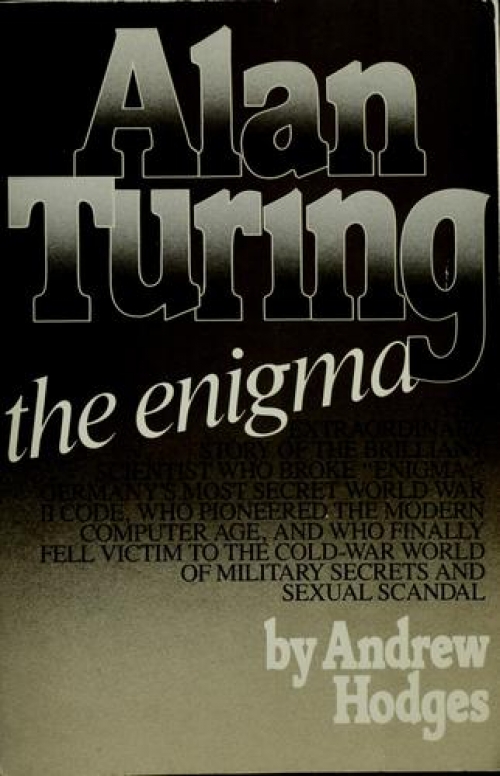
Ricky Gervais has a post up on the Daily Beast about the biggest regret of his career:

I was on holiday with my girlfriend Jane in about 1999 in Hungary (yeah, I know, odd choice, but money was tight). We visited this huge Victorian museum one day, and as I was walking round I had an idea for a movie in which all the exhibits came to life and started running amok ... Huge effects, an amazing spectacle. When we got back to our hotel room, I started writing the screenplay.

Read More
Literary Manifesto Trapped by its Gloomy Doom Needs Smiley Face, Ass-Kicking

The White Review''s current issue has a stunning example of High Intellectual Preposterousness. Lars Iyer has written a manifesto calling for an acknowledgment of the end of literature:

The only subject left to write about is the epilogue of Literature: the story of the people who pursue Literature, scratching on their knees for the traces of its passing. This is no mere meta-gamesmanship or solipsism; this is looking things in the face ... It’s time for literature to acknowledge its own demise rather than playing puppet with the corpse.

Is he serious? This is silliness, this is absurd. From the style of the manifesto itself, it’s hard to judge whether he’s being satirical or sarcastic, or if he’s really asserting what he believes to be true. Manifestos are full of pomp and grandeur, drenched in language that is bombastic, declamatory. Iyer’s is no exception. So I hunted the internet in search of his true intention and found that no, he was not joking. In a  3AM Magazine interview, he elaborates:

It is not simply that the relationship between literature and community has collapsed, nor even that literature is no longer in contact with politics. For me, the meaning of literature itself—the very possibility of literature—has collapsed. Literature, like left-wing politics, seems impossible ... I can only say that it seems to me that literature has, in some fundamental way, run its course.

What does this mean, "literature has run its course"? Is that why Iyer's book, Spurious, is so interchangeable with his blog, Spurious? To me, this is like saying sex has been slain by pornography, that eating is over because of fast food. People will always fuck and eat. Fucking and eating aren’t destroyed by depravities and deformations in their use. Yes, there is history and influence and philosophy and modern practice and all the rest. But there is still choice and there is still necessity.

Literature does not die, there is no end in it, it is something we do.

Rather than spend more time in inquiry and exasperation over this high intellectual dreariness, I’d like to simply present some evidence to the contrary. For intelligent discourse concerning the interaction of literature and culture, primarily in terms of how some of the more powerful influences and gatekeepers of culture present literature, I suggest an interesting piece by Roxane Gay up at the Rumpus. To see the existence of a literary magazine partially initiated because “we are tired of hearing that literary fiction is doomed,” check out Electric Literature.  And to hear from a true professional about his interactions with the great beast of literature, I highly recommend this interview with Ben Marcus from Harper’s.

A quick glance at any one of these demonstrates that literature has not run its course, and, for a great number of people, does not seem impossible.

Photo: living.oneindia.in

Read More