



“If a same sex marriage bill comes to the desk of Governor Christie, it will be returned to the legislature with a big red veto on it.” New Jersey Governor elect Chris Christie remembering his Hester Prynne in 2009. New Jersey and Washington State legislatures both passed of marriage equality bills on Monday.
“The fact that Virginia prohibits only interracial marriages involving white persons demonstrates that the racial classifications must stand on their own justification, as measures designed to maintain White Supremacy. We have consistently denied the constitutionality of measures which restrict the rights of citizens on account of race. There can be no doubt that restricting the freedom to marry solely because of racial classifications violates the central meaning of the Equal Protection Clause.” The court’s opinion inLoving v. Virginia, 1967.
“The gem belongs on the ring, standing proud and broad. The stream belongs among the waves, mingling with the ocean flood...The bear belongs on the heath, old and awesome...The female, the woman, must visit her lover with secret cunning—if she has no wish to prosper among her people so that someone will purchase her with rings.” Anglo Saxon wisdom poem Maxims II.
Let Me Recite What History Teaches (LMRWHT) is a weekly column that flashes the lavalamp, gaslight, candlelight, campfire, torch, sometimes even the starlight of the past on something that is happening now. The form of the column strives to recover what might be best about the “wide-eyed presentation of mere facts.” Each week you will find here some citational constellation, offered with astonishment and without comment, that can serve as an end in itself, dinner party fodder, or an occasion for further thought or writing. The title is taken from the last line of Stein’s poem “If I Told Him (A Completed Portrait of Picasso)."
Photograph of Mildred and Richard Loving by Grey Villet, via Time Magazine

"I want to do with you what spring does with the cherry trees," wrote Pablo Neruda. And with Black Balloon's Valentine Haiku Contest, we wanted to do with haikus what Valentines does to your waistline: expand them. We wanted to expand the limitations of a haiku to include the two key elements of Black Balloon's first release, The Recipe Project: food and music. And what Valentines Day would be complete without those two ingredients?
We asked our loyal Twitter and Facebook followers to write us romantic haikus about food and music, and the results were awe-inspiring. Cilantro, stuffed zucchinis, cannolis, cast-iron frying pans: these were only a few of the poetic elements that our intrepid fans used to evoke the hunger of the holiday. Below are the top five entries, and we hope they expand your hearts just as much as your waistlines.


Thanks to everyone who participated. Winners: enjoy your copies of The Recipe Project, and have a happy Valentines Day!


Faulkner was a mailman. Charlotte Brontë was a governess. And you? Whether you're fresh out of school or staring down yet another career change, here are five jobs that can give you a steady paycheck and an unfettered mind for your scribblings!
Banking. T. S. Eliot repeatedly turned down editorial opportunities to keep working as a banker and wrote several of his best poems during that time. “I am absorbed during the daytime by the balance sheets of foreign banks. It is a peaceful, but very interesting pursuit,” he declared in a letter. And much of the force of The Waste Land comes from his depictions of the “Unreal City,” filled with equally bland businessmen. Banking just might be the perfect job for writers who think in iambic pentameter.
Actuarial. With clockwork habits and a monotonous wardrobe, Wallace Stevens stayed at the Hartford insurance company all his adult life. He composed his poems on his way to and from work, and pulled out his calculator as soon as he entered the office. Much like banking, the industry is dominated by numbers and statistics. Surprisingly, though, actuaries have a high level of satisfaction with their jobs. It’s not as exciting as test-driving roller coasters, but it’s much more reliable and stress-free. Detail-oriented writers encouraged to apply.
Law. Franz Kafka worked in Legal, and usually finished with his day’s work by about two in the afternoon. Reading and writing legal documents doesn’t allow much daydreaming, but the often juicy subject matter at hand has turned out such writers as John Grisham and Stephen L. Carter. A crime, a detective, a criminal, and a punishment—what setup could be simpler or more alluring? This is the ideal job for a mystery writer: all the facts are there, but the devil’s in the details.
Medicine. It was a trend even before Chekhov declared that “Medicine is my lawful wife and literature is my mistress,” and poets and novelists alike—from John Keats and William Carlos Williams to W. Somerset Maugham and Khaled Hosseini—have followed in that doctor’s footsteps. Maybe it’s the rigor of med school that forces these authors to attend to patients and words with equal discipline. Maybe it’s their immense fascination with the human body. Character-driven novelists should start studying for their MCATs.
Library Science. Okay, so nowadays the job requires a hefty graduate degree, but if the children’s book author Avi and bestselling novelist Jayne Ann Krentz have both spent time behind the checkout desk, so can you. Once you’re in the door, you’re almost working in a bookstore. The biggest advantage? Your coworkers might actually read your novel when it comes out.
Keep in mind that, for the first time in forever, unemployment rates are on the decline. And getting away from your laptop will do your brain good. Your novel will thank you, so make like Bubba and get Back to Work!
Image credit: fotolog.com


"‘This is an historic day,’ Kerr said. ‘For the first time in our nation's history, a federal court heard arguments as to whether living, breathing, feeling beings have rights and can be enslaved simply because they happen to not have been born human.’ …. [Sea World attorney] Shaw warned the ruling would have profound implications … ‘We're talking about hell unleashed,’ he said.” —CBS News, February 7, 2012, reporting on PETA attorney Jeffrey Kerr and his 13th amendment lawsuit on behalf of five killer whales
“Dr. Navarre refers, in his work on excommunication, to a case in which anathemas were fulminated against certain large sea-creatures called terones, which infested the waters of Sorrento and destroyed the nets of the fishermen. He speaks of them as ‘fish or caco-demons’… and maintains that they are subject to anathematization not as fish, but only as devils.” —from E.P. Evans' 1906 study Criminal Prosecution and Capital Punishment of Animals: The Lost History of Europe’s Animal Trials
“…as for me, I am tormented with an everlasting itch for things remote. I love to sail forbidden seas, and land on barbarous coasts. Not ignoring what is good, I am quick to perceive a horror, and could still be social with it—would they let me—since it is but well to be on friendly terms with all the inmates of the place one lodges in.” —Ishmael, in Moby Dick (1851); part of this passage is cited in D. Graham Burnett’s new book The Sounding of the Whale
Let Me Recite What History Teaches (LMRWHT) is a weekly column that flashes the lavalamp, gaslight, candlelight, campfire, torch, sometimes even the starlight of the past on something that is happening now. The form of the column strives to recover what might be best about the “wide-eyed presentation of mere facts.” Each week you will find here some citational constellation, offered with astonishment and without comment, that can serve as an end in itself, dinner party fodder, or an occasion for further thought or writing. The title is taken from the last line of Stein’s poem “If I Told Him (A Completed Portrait of Picasso)."
Image: Autocowrecks

Following yesterday's post on the correlation between creativity and personal space, James R. checks out a study that, seriously, could revolutionize the way we go about writing. But first, some brain teasers.
Read More
In last week's New Yorker, science writer Jonah Lehrer presents an interesting correlation between creativity and physical space. He sums it up with a quote from Isaac Kohane, a Harvard Medical School researcher: "Even in the era of big science, when researchers spend so much time on the internet, it's still so important to create intimate spaces."
Read More

Reading through Flavorwire’s recent list of The 25 Greatest Epigraphs in Literature, and being generally in the habit of stealing, I got to thinking: where else might epigraphs be of use? Traditionally, they help establish the tone of a book or introduce the reader to its main ideas. And aren’t there countless inaugural moments in any given day, the brief beginnings of some larger task, that could benefit from a quick, pithy introduction?
So I took a couple of my favorite epigraphs from Flavorwire’s list and came up with some unexpected places I’d like to find them.
”When we are not sure, we are alive.” —Graham Greene
(from Reality Hunger by David Shields)
I’m inclined to start tagging this one everywhere I go. Imagine finding this quote stamped on your baby’s diaper. Or on that unopened bottle of pig’s feet you that keeps staring at you from the depths of the fridge. What about on a subway map? Or on the entrance to the subway, replacing those uninspiring indications of Uptown/Downtown? How could strategically placing this quote around town not inspire adventure?
“Fairy tales are more than true: not because they tell us that dragons exist, but because they tell us that dragons can be beaten.” —G.K. Chesterson
(from Coraline by Neil Gaiman)
I want this on my next tube of toothpaste. Anything hygienic or related to sanitation. Is my new fantasy to have Mr. Clean whisper this in my ear as I scour the bathtub? Maybe it is. Maybe I have a problem with cleaning products. It’s still a good idea.
”No one knows how to love anybody’s trouble.” —Frank Stanford
(from Look! Look! Feathers by Mike Young)
Picture this written above the entrance to your favorite bar. The whole “everybody knows your name” Cheers vibe is so 1987. And while young drinkers might get nostalgic because Cheers was was the only option in your parents' cable-free househould, the drinking scene has gone way more toward an honest acceptance of degradation and defeat. Plus, if this is posted out front, the bouncers can do whatever they want to you.
“We fill pre-existing forms and when we fill them we change them and are changed.” —Frank Bidart, “Borges and I”
(from The Pale King by David Foster Wallace)
This might be so totally obvious, but...ice cube trays! How delightful would it be to sip highballs full of Borges-inscribed ice cubes and then dance around with Buddhist-like glee! Interacting with the universe! And science! Because of the whole liquid-into-solid situation!
“Behind every great fortune there is a crime.” —Balzac
(from The Godfather by Mario Puzo)
Okay. This one I can’t really justify in any way other than to tell you I feel it in my gut. Peanut Butter. Maybe it’s something about the lush extravagance in peanut butter, its silky delight and its decadent linger in the mouth. But really, how do you feel when you sneak into the fridge at night and spoon some up? Like a criminal.
Image: supertouchart.com


When I was young, I had a vendetta against the word “or.” “It makes you sound undecided,” I told a friend, after reading her high school English papers. “Use ‘and.’ ‘But’ also works.” It wasn’t that I disliked the word per se; I just thought that conjunctions didn’t need to be used so much.
Four years later, one of my professors called me out on my predilection for closing lists without conjunctions. “You’re fond of asyndeton,” and she typed the word. She recited Aristotle’s thoughts on the technique in hisPoetics, and gently suggested that asyndeton was perhaps most successful if used sparingly. Churchill’s oratory aside, she was absolutely right. So I told myself to leave the conjunctions in, although I did keep a safe distance from “or.”
Then I read Ben Lerner’s Leaving the Atocha Station. Nominally the story of a young poet living in Spain on a fellowship, the novel rests on uncertainty and consciousness rather than any particular plot. Reading of the narrator's struggles to understand and respond to the Spanish spoken around him, I noticed how he used “or” as a way to juggle many possible meanings: "She described the death of her father when she was a little girl, or how the death of her father turns her into a little girl whenever she thinks of it..."
Lerner discussed this in a BOMB interview: "Yes, “or” is an important word in the book, especially in those scenes where Adam Gordon can’t tell if he’s following the Spanish of an interlocutor, and so, instead of simply failing to understand, understands more than one possible meaning at a time ... Hearing a Spanish sentence as X_ or _Y allows him to keep his exchanges from becoming actual, to keep them in the realm of the virtual."
“Or” as a marker of uncertainty, yes—but Adam Gordon, the narrator, shifts the need for actuality and certainty onto his readers and listeners. The premise of the novel is that the narrator is constantly plagued by the need to feel authentic and transcendent; his intentional use of “or” forces other people to make that decision for him. He lets himself live in uncertainty.
Is “or” the conjunction for our time? Adam Gordon drowns in polysyndeton in the wake of the 2004 Madrid train bombings—an event many people grieved over as on 9/11. The words I remember from that time, though, were authoritative. On the radio, people reread Auden’s “September 1, 1939,” where Auden memorably uses “or” to oppose: “We must love one another or die.” The conjunction didn't seem uncertain at all, actually.
“Or” seems less definitive, less divisive now than it did in 2001 or 1939. Robyn Cresswell pinpoints a contemporary, perhaps more honest direction in his appreciation of Thomas Sayers Ellis’s “Or,”: “The poem begins, as I read it, by riffing on the either/or logic ... But it quickly ramifies into geography, history, poetics.” Perhaps “or” isn’t quite so terrible; maybe it’s as a way of conjoining many different coexisting possibilities, but without rejecting any of them or forcing us to choose.
Image credit: http://wandahamilton50.com


A New York Times review of Would It Kill You To Stop Doing That?, a new book on manners by Henry Alford, got me thinking about how much of my social grace I’ve gleaned from works of fiction. Beyond the more obvious social dramas of Austen or Fitzgerald, books can provide useful advice on how to act in certain situations—and warn of the consequences when certain behaviors are found undesirable.
I figured, if James could look to literature to gain a little perspective on zoophiles, I could consult the bookshelf to learn how to behave. What follows is a brief guide to help you get started.
- All little children should be given Cormac McCarthy’s The Road. Sure, it’s a little violent, but unimaginable horror never killed an eight year-old. The lesson here is embodied in the boy: at the end of days, walking around starving, the little guy hardly ever complains (or talks, for that matter), and he's spectacularly polite and loving towards his father. Does your kid whine about not getting the candy cereal at the grocery store? Hand him or her a copy. Maybe read it at night before they go to bed. See what happens.
- Do you know any sexual deviants who just need to shut up about it already? Give them a copy of Mary Gaitskill’s Bad Behavior. One of the beauties of Gaitskill’s short stories is how remarkably calm everybody is about how messed up their sex is. As uncomfortable and sometimes harmful as her characters can be, Gaitskill narrates in a way that shuts down all the annoying, gossipy shock value and allows the perverts to be precisely what they are: just humans.
- Even though it was published way back in 1962, I think Another Country by James Baldwin should be handed out to every white, liberal-leaning heterosexual along with their organic oats and fair trade coffee. Have you ever referred to someone else’s partner as their "roommate"? Do you decorate with the aim of exhibiting your knowledge of cultural difference? Maybe you’re super well-intentioned but don’t understand what all the fuss is about. Mr. Baldwin can tell you.
- Is there anything worse than the plethora of man-children running around today? Guys in their twenties and thirties shirking the responsibilities of career, family, haircuts, bathing. Maybe it’s time for a good look at one of the prototypes of the modern man-child: Rabbit, Run by John Updike. The book should be read not to shore up men's juvenile mindsets, but to show them that their very special feelings of entrapment and angst are anything but new. Besides, until you can narrate your life at the level of Updike’s prose, your angst won’t even get you any attention.
But the best reason to pick up a book of fiction? It might not even be the wisdom between the covers, but that your chances of fucking up decrease if your nose is stuck in one.
Image: tylershields.com
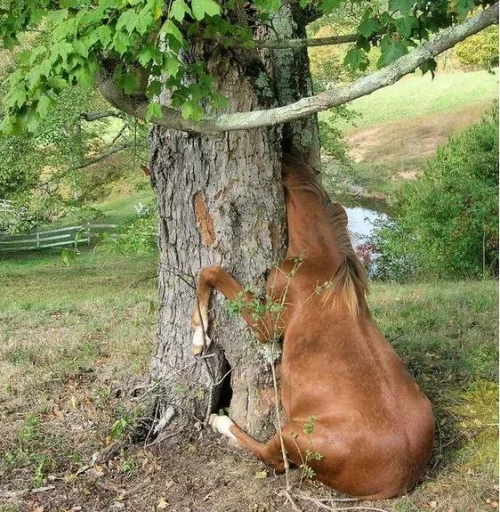
Jesse Bering’s recent Slate article “Porky Pig” is a shocking, hilarious, and ultimately brave look at the stranger-than-fiction world of zoophilia. This line says it all: “For most people, it’s an icky conversation to have—I do wish my dog would stop staring at me as I’m typing this—but queasiness doesn’t negate reason.”
Read More
 A Black Balloon Publication ©