



Haruki Murakami was struck by inspiration whilst sitting in traffic.
Perhaps he was on his way to the Biltmore to shoot the shit with Holden?
Although, he'd need the help of Stephen King's time machine
And Florence and the Machine for some good roadtrip music
Or maybe some David Lynch for a nice dose of crazy.
A foodie classic gets an illustrated reboot
While a foreclosure firm shows off its poor taste in humor
Which would make an excellent idea for a protest book
Unless a freak snowstorm cancels that idea as well.
If that's the case, start planning your last meal
And if you're having escargot, make sure it's not Marcel the Shell.

Nowhere am I more besieged by verbal notification and billboard instruction than I am in the bowels of the New York City MTA. “Stand clear of the closing doors.” “A crowded subway is no excuse for unlawful sexual behavior.” “The next Rockaway Parkway bound L train will depart in approximately twenty-two minutes.” Back in August, Oliver Burkeman’s “This column will change your life” series summarized various studies on the impact signs have on human behavior. What I gather is that greater specificity leads to greater compassion (or obedience), and that over-signage is an enormous disturbance that perpetuates compulsive behavior.
Read More
Beyoncé's video for "Countdown" has got me wondering: when did eye spasms, epileptic winks, vertiginous whatever-rolls and hummingbird blinks become the new voguing? Are hyphy eyes the next big thing?
Read More
Coming across “The World’s Rudest Hand Gestures” in The Atlantic made me wonder if people really gave the finger anymore. Surely the decline in my own personal usage of the finger is not a result of my waning adolescent scorn but rather an example of how the finger, as a viable means of communication, has gone out of style. Can you imagine giving the finger with sincerity? Can you imagine receiving it?
Read More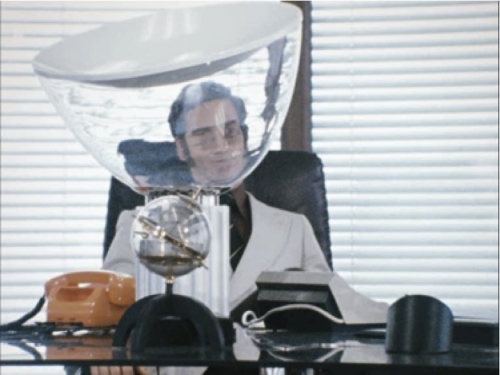
This summer saw the widespread US release of World on a Wire, German director Rainer Werner Fassbinder’s long-lost, made-for-TV epic about artificial intelligence and virtual reality. Time to reflect.
Read More
Outside of a town called Homer, NY, we put on the new Wilco album. "We" is me and three others, two of whom are Australian. We started playing together early this year. We’re aiming a rented Toyota minivan at Toronto, where we’ll play later tonight. Tomorrow we’ll drive this same highway, passing Homer in the other direction, smuggling only our hangovers and tinnitus back home.
Read More
Every weekend of the summer, I pitched a tent along the East River to sell pasta at the Smorgasburg.
The pasta I sell is organic, comes in over 70 flavor varieties. “Do you make the pasta?” is the question I get asked the most. “I don’t,” is the answer. It’s made near Rochester by a bearded man named Jon who makes the 6-hour drive to Brooklyn once a month to deliver a few hundred pounds of dowel-dried noodles.
Read More
“Someone had a Grade A lungfish decorate their home for a merry fool’s function.”
This line came from a Rick Perry endorsement ad audio-doctored by the brilliant dub artists at Bad Lip Reading. Remember Audio-Tune the News? Bad Lip Reading is like that, except they graft absurd voiceovers onto video clips of everyone from pop singers (Bruno Mars) to politicians (Obama)—none of them as hysterical as Perry’s sabotaged campaign ad, which went viral and gathered almost two million views.
Read More

Previously in this series, James listened to Wilco’s The Whole Love en route to a show in Toronto. We join him now on his way home.
Back on American soil. Shattered, thanks to an all-night speakeasy that a waiter at our show had told us about. I had refused to sit out any rounds, even though the guy buying them, our singer, is six inches taller than I am and Australian. This same singer, totally unaffected by the vats of lager he'd ingested on the other side of dawn and the Canada-America border, puts on Feist’s new album, Metals.
It begins quietly, which is good. I had put on the Descendents’ ALL as we pulled out of Toronto, but that only added to my suspicion that someone had stuck a pushpin through my left eyebrow while I slept.
“Bring ‘em all back to life,” she chants in the second song, even more lowdown than the first. I start thinking back to Feist’s breakout year. LikeYankee Hotel Foxtrot, The Reminder was absorbed by most of us simply by having been alive at the time of its release. Shops, apartments and TV networks all seemed to play it on a loop. For a little while, it was the score to everything.
So I’m surprised to find Metals serving up one dirge after another. Feist’s voice could make a Burzum song buoyant, but here she’s surrounded it with thundering toms, plodding horns, and guitars as stark as PJ Harvey’s on To Bring You My Love. In fact, Harvey’s spooky middle years hang over the whole album. I love that sound, but maybe it’s best experienced at night, in one’s room. Not so much in a van that keeps passing red barns, silos, and...were those llamas?
Metals could function as a flawless makeout album—with two exceptions. The chorus of “A Commotion” sounds like Agnostic Front had wandered into the vocal booth; and “Undiscovered First” lurches into a growling, stomping waltz. Otherwise, the resolutely doleful mood has the guys up front calling out, “Change gears, Feist.”
The album ends—“Get it right, get it right, get it right”—and our drummer puts on Fleetwood Mac's Rumours, a learning curve-free album if ever there was one. Metals will take some time, but it’s time I’m willing to spend (ideally without the accompaniment of a skull-cracking hangover)—time, I’m sure, many of us will invest, once we accept that this particular followup is morePinkerton than Neon Bible. Feist has years to create the work that synthesizes Metals and “My Moon.”
Photo: faceook.com/feist

Wife: “Can we please listen to something else?!”
Me: “I thought you didn’t care.”
Wife: “ENOUGH FUCKING MAHLER!”
And with that the Adagio of Mahler’s Ninth—one of the most achingly desperate representations of human frailty and mortality in music—is abruptly replaced by the thyroid-thumping throb of Lady Gaga.
Wife (singing): “‘Rah-rah-ah-ah-ah-ah! Roma-roma-maaa!’”
Me: “I got it.”
Wife: Gaga just made Mahler her BITCH!!”
It’s too early for this. I leave the room, put on my sneakers, and head out for a morning run.
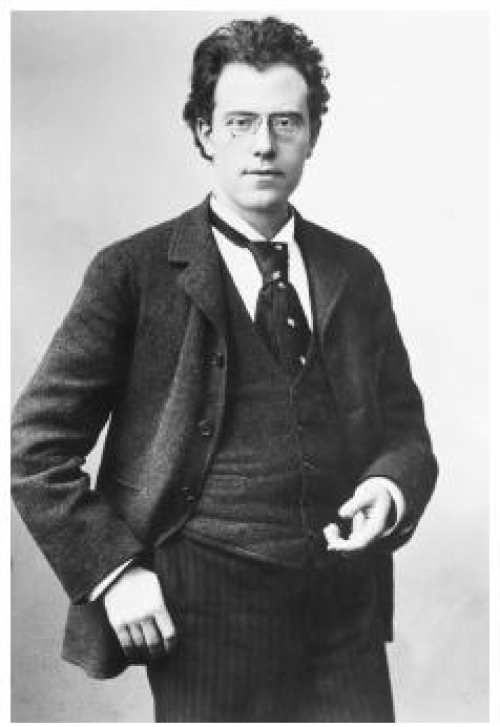
I’ve been listening to a lot of Mahler recently because 2011 marks the centennial of his death. Last year marked the sesquicentennial of the composer’s birth, thereby unleashing two-plus years of geeked-out Mahler hysteria. Orchestras around the world have dedicated multiple concerts to perform Mahler’s works. Special edition box-sets have been issued. Coins have been minted. And many articles, books, and DVDs issued. Along with my fellow deranged Mahlerians, I’ve been blissfully immersed in at all.
Of all that I’ve read about Mahler and his music recently one biographical quirk has been a source of continuing fascination: his estranged brother, Alois, who moved to Chicago sometime in the early 1900s. Essentially disowned by Gustav and his other siblings, Alois moved to the U.S. to begin life anew (he also changed his name to Hans). While little is known about Alois’ American life (he died in 1931), his final address in Chicago, 3931 North Hoyne, is a mere 5 blocks from my house.
Now, on my early morning runs, I will occasionally run past Alois’ old house, in an odd sort of homage to his famous brother and imagine who Alois was and what, if anything, he thought of his brother’s music. Did Alois attend the debut of his Gustav’s music (Fifth Symphony) in Chicago in 1907, or the performance of the Eighth in 1917? Did Alois mourn Gustav’s death in 1911?
Alois’ old house has also become a touchstone of sorts for my own reflections on Gustav’s life, family, and music: How does Mahler’s music reflect his relationships with others? Is Theodor Adorno right that Mahler’s music traces “the history of a breaking heart”?
I believe my polite historical stalking symbolizes a search for a deeper, nuanced, more personal connection with Mahler’s music—a subterranean attempt at exposing the unexposed, of yearning to identify the invisible and forgotten next to the canonized and memorialized, and thereby striving to humanize one man’s music.
Or at least that’s what I tell myself as I run past a stranger’s house at 6:00AM.
(Photo: Corbis)

 A Black Balloon Publication ©