



I'd nearly completed reading The Wind-Up Bird Chronicle in Japanese when I found this impressive "liveblog" of Haruki Murakami's magnum opus1Q84 on Daniel Morales' site howtojapanese.com. Oh yeah, I thought, I need to get on this. In September 2009, I picked up the first two volumes of1Q84 (volume three was published in Japan in April 2010) and made it my goal to tackle 'em. I noted the English translation wouldn't be out until fall 2011. What the hell, I'll read and translate!
The translation was arduous, funny at times and painful in others. Example: spending ten minutes chipping away at a paragraph, cringing as 睾丸(testicles) gave way to 蹴る (to kick). Another recurring hiccup was Murakami's aforementioned pop culture name-dropping, peppering the text with names like バーニー・ビガード (jazz clarinetist Albany Leon "Barney" Bigard) and トラミー・ヤング (trombonist James "Trummy" Young). I have a newfound appreciation for Louis Armstrong's All-Stars. Plus, I learned tons of vocabulary, which helped hugely in my coursework at the Japan Society (and hopefully impressed some girls). Translating forced me to read1Q84 slowly, savoring each surreal, mundane or salacious passage. It also ensured a very personal way of understanding Murakami's text.
When The New Yorker ran an excerpt from 1Q84 in early September 2011, nearly two months ahead of its English publication, I felt oddly wary. It was "Town of Cats," originally Chapter 8 of Book 2 (and over 700 pages deep) in the Japanese text. Murakami calls this place and its namesake in-text fable 「猫の町」, which I worded as "Cat Town." Now it's in print as "Town of Cats." I suppose both "sound" like a fable, but this simple incongruity didn't sit too well with me. I read "Town of Cats," enjoyed it overall, but now awaited the English publication guardedly.
So guardedly that I've yet to read fully the English 1Q84, translated by Jay Rubin and Philip Gabriel. I've spent hours flipping through the pages, remarking on its considerable heft and Chip Kidd's awesome design. But those bits I was worried about? Here's my take on an early passage, from Chapter 1 of Book 1:
Aomame inhaled deeply and then exhaled. She then climbed over the railing while continuing to chase the melody of "Billie Jean" in her ears. Her miniskirt rolled up over her hips. "Who cares!" she thought. If they want to look, let them look. It's not like they're going to see what kind of person I am just from seeing under my skirt. Besides, her firm, alluring legs were the part of Aomame's body that she was most proud.
And the official translation:
Aomame took in a long, deep breath, and slowly let it out. Then, to the tune of "Billie Jean", she swung her leg over the metal barrier. Her miniskirt rode up to her hips. Who gives a damn? Let them look all they want. Seeing what's under my skirt doesn't let them really see me as a person. Besides, her legs were the part of her body Aomame was the most proud.
Incidentally, I didn't add that "firm, alluring" part: that's in the original. It's the little rhythmic jazz, like "railing" vs. "metal barrier", "chase the melody" vs. "to the tune"—inherent in Murakami's words—that's missing in the official translation.
Murakami's classic weirdo teenage girl here is ふかえり, which for language students is written entirely in hiragana (like long-form Japanese script, often seen in some degree in women's proper names). It's her nom de plume, a takeoff from her real name 深田絵里子, or Fukada Eriko. I translated it as Fukaeri, running the sounds together rather mellifluously. That's how it would sound in Japanese! Nope: in English 1Q84, it's Fuka-Eri, overemphasizing that fact she's contracted her given and family names together.
Also: how Fukaeri/Fuka-Eri speaks. Murakami emphasizes her flat, laconic tone by writing her dialogue in only in hiragana/katakana, the two syllabic Japanese writing systems, versus intermingling them with kanji. Here's my version of one of her exchanges with Tengo (the second major protagonist, one of Murakami's most classic thirtyish, slightly clueless males):
"You know me?" Tengo said.
"you teach math"
Tengo assented. "That's right."
"i've heard you twice"
"My lecture?"
"yeah"
There was something peculiar about her way of speaking. Her sentences were scraped of embellishment, and there was a chronic lack of accent, limited (or at least presenting that limited impression to others) vocabulary. Like Komatsu had said, certainly odd.
And the official translation:
"You know me?" Tengo said.
"You teach math."
He nodded. "I do."
"I heard you twice."
"My lectures?"
"Yes."
Her style of speaking had some distinguishing characteristics: sentences shorn of embellishment, a chronic shortage of inflection, a limited vocabulary (or at least what seemed like a limited vocabulary). Komatsu was right: it was odd.
This girl speaks, like, teenage-angsty cool. Even changing that trite "yeah" into a "yes" feels a bit polite. Murakami has a history of writing characters with unusual ways of speaking, like the Sheep Man in Dance, Dance, Dance(depicted in English conversing in long run-on phrases), the plucky old scientist in Hard-Boiled Wonderland and the End of the World (hillbilly accent), and old savant Nakata in Kafka on the Shore (simple English, even simpler than Fukaeri/Fuka-Eri). But how much of their conversational quirkiness makes it into the English?
It's not totally surprising I feel so strongly about my first Haruki Murakami novel, The Wind-Up Bird Chronicle, which I read in English, and reading1Q84 entirely in Japanese ahead of its English translation. I can practically recite from memory passages from both, and though I'm pleased to have read ねじまき鳥クロニクル belatedly in Japanese, Rubin's English text will forever remain close. I'm sure I will come around to fully reading the Rubin/Gabriel translation of 1Q84, though I'll be unable to shake the notion that what I'm reading is just their interpretation.
Photo: Mr. Fee


A few fun-facts about Haruki Murakami, Japan's most celebrated contemporary author and the man behind the year-end publishing sensation1Q84: he name-drops classical études as frequently as 20th century jazz and rock greats; he once ran a coffeehouse-jazz bar in Tokyo; and he's a triathlete. The man is a well-rounded badass.
I knew little of Murakami when I began reading The Wind-Up Bird Chronicle—some six hundred pages of potent modern-day Surrealism—back in university. Jay Rubin, one of his three longtime translators, handled the English edition, a necessary thing for me then as a just-budding student of Japanese. In addition to the silky prose, I was enraptured by the directness of dialogue and description despite Murakami's continual bending of reality.
I compared Rubin's translation with an earlier one by Alfred Birnbaum, who'd translated the first chapter of The Wind-Up Bird Chronicle as The Wind-Up Bird and Tuesday's Women (it originally ran in The New Yorkerseveral years prior but reappeared in the short story collection The Elephant Vanishes), and instantly sided with Rubin. The interplay between Murakami's classic thirtyish male protagonist, Toru Okada, and the author's equally classic weirdo teenage girl, May Kasahara, just felt better in Rubin's words:
Strange, the girl's voice sounded completely different, depending on whether my eyes were open or closed.
"Can I talk? I'll keep real quiet, and you don't have to answer. You can even fall asleep. I don't mind."
"OK," I said.
"When people die, it's so neat."
Her mouth was next to my ear now, so the words worked their way inside me along with her warm, moist breath.
"Why's that?" I asked.
She put a finger on my lips as if to seal them.
"No questions," she said. "And don't open your eyes. OK?"
My nod was as small as her voice.
She took her finger from my lips and placed it on my wrist.
Compare that with Birnbaum's earlier translation. That directness, that humidity-induced curtness, is lost:
Strange, I think, the girl's voice with my eyes closed sounds completely different from her voice with my eyes open. What's come over me? This has never happened to me before.
"Can I talk some?" the girl asks. "I'll be real quiet. You don't have to answer, you can even fall right asleep at any time."
"Sure," I say.
"Death. People dying. It's all so fascinating," the girl begins.
She's whispering right by my ear, so the words enter my body in a warm, moist stream of breath.
"How's that?" I ask.
The girl places a one-finger seal over my lips.
"No questions," she says. "I don't want to be asked anything just now. And don't open your eyes, either. Got it?"
I give a nod as indistinct as her voice.
She removes her finger from my lips, and the same finger now travels to my wrist.
Years later, after moving to New York, I re-engaged my Japanese language studies hardcore. I picked up The Wind-Up Bird Chronicle in its original Japanese at Kinokuniya. This was my first attempt at reading novel-length Murakami, and I reveled in it. His prose is delightfully unembellished, and while it will prove difficult to first-time language students accustomed tomanga or Harry Potter in Japanese, I found myself speeding through it. Comparing the original Toru-May passage to the translations, I believe Rubin still captures its mood better than Birnbaum. He nails the girlish, fearless 'tude of May's back-and-forth with this older, slightly naïve guy.
I felt confident that I was reading Murakami as he intended with Rubin's translation. It's a fairly well-known fact that large chunks were excised in the English text (highlighted here in a roundtable email conversation between Murakami translators Rubin and Philip Gabriel, with Knopf editor Gary Fisketjon). Did I miss these sections when I first read it in English? No, but discovering them in Japanese—like an entire chapter's worth—was welcoming. Still, I've spent so much time living in Rubin's translations, navigating well-worn pages, that I return to the comforts of the English-language book without hesitation.
(Part two, on my introduction to 1Q84 in Japanese, to follow)
Photo: Mr. Fee
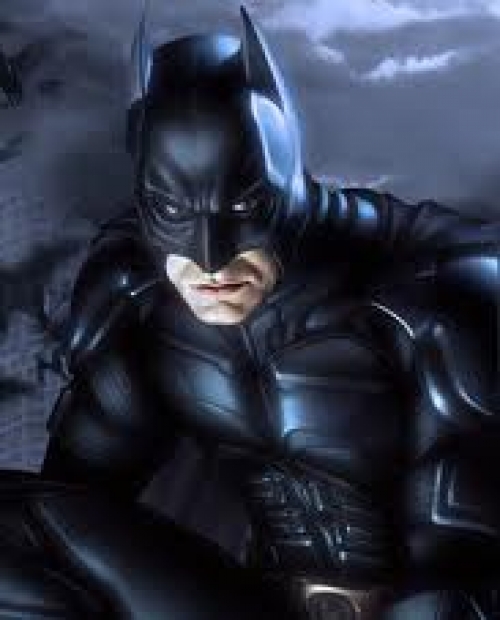
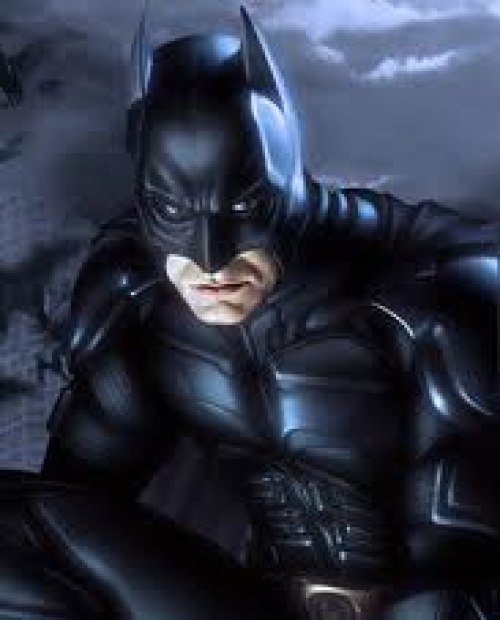
With all the fanfare for the new trailer for The Dark Knight Rises, I got to thinking about how no one, absolutely no one gets excited about the release of a book trailer. Why are they so awful and tedious and boring? Why can’t they be as exciting as film trailers? Is an awesome book trailer even possible?
After much laborious research, I’ve concluded that most book trailersconsist of strung together still images (many of which are abhorrently generic) accompanied by emotional music, bad graphics, and clichéd text, plus some blurbs. There is also the author-interview approach, the ignore-the-book-entirely approach (better than most, as we shall see), the blurb onslaught. There is a whole lot of footage of graphics being drawn.
Movie trailers, regardless of how bad they are, provide a sense of a different world; they offer a peek at something you can escape into. Book trailers, for the most part, don't. Certainly there are budgetary restraints, but that’s not the only reason book trailers aren't like movie trailers. Reading is a vastly different experience from watching a film—and while seeing clips of a movie gives you a taste of that movie, seeing a book trailer can only attempt to translate an experience that might someday exist in the reader’s imagination. A successful book trailer should make you want to read the book, not watch a movie of the book.
So how do we do that?
I say book trailers should not address content in any way. They should be sleek, vibrantly edited montages of soft-core porn interspersed with the book’s cover. Maybe clips from an interview where the author says, "Yeah, I’ll tell you what writing this novel was like. It was like *^%ing your sister with a *&^," and then throws a bottle at the camera. Then show the cover of the book again. The point is to get the most eyes to see the cover, to know the title. Maybe we’re in a field where unicorns are eating the grass and it’s super cute and kind of sexy and then the camera zooms in and we see that the unicorns are really eating the book!
Whatever you do, don’t tell me about the fucking book. The book will tell me about the book.
That said, I did come across some pretty impressive book-related film content. I suppose, if soft-core and unicorns and violence aren’t your thing,Electric Literature can show you how good book trailers could be. Now if only Dan LaFontaine were still with us.
Photo: movieweb.com

Artist's approximation. This is how we picture Todd's desk, Linux Fish et al.
Credit: Flickr user blakespot. Used with a Creative Commons license.
Todd is a person. He lives in Chicago. He's half-Cylon, half-Bartlett's Quotations. He does not do interviews. These quotes come directly from his mind to your screen/God's ears.
Todd says, "You're Welcome."


Barring any Mayan prophecies that may come true, the Black Balloon bloggers will be back after the New Year. Expect entries on everything from Batman to Japanese fetish bars and beyond. But in the mean time, have a happy fuckingholidaysing and we'll see you in the year of the dragon!
Image credit: Burlesque


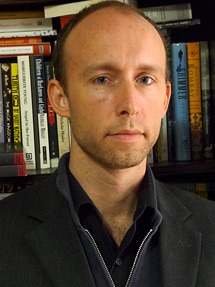
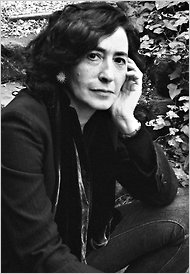
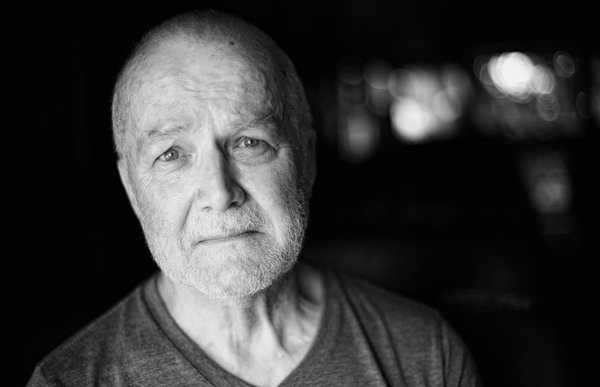
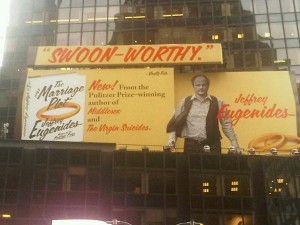
Inspired by the season’s innumerable "best of" lists (and blooming off an earlier post in which I analyzed poets' faces), I decided to take stock of some of my favorite author photos of 2011. For me, great author photos are all about discomfort. The photo shouldn’t convey information about the subject so much as force the viewer to feel uneasy, maybe even squeamish. The goal of the author photo is to make the viewer believe the author has something the viewer must know, that not purchasing and reading the author’s book will have some obscure but detrimental consequence. Here are my top picks for 2011!



Could it be opposite day? Jocks are becoming nerds!
James Franco is flunking acting class!
But back in the normal world, Charlotte Bronte is still the most popular of her sisters
Nerds are pleased with the latest Batman trailer
And the masses have replaced planking with avocado-ing
Writers aren't having much luck though, as poet Carl Sanburg's home is being foreclosed
And Maya Angelou calls out Common for being "vulgar and dangerous"
While the writing world experiences a dearth of scathing wit with Christopher Hitchens's death
Similarly, The music world may soon be without the legendary talent of Etta James as well
World leaders have also been in the obits lately, with the deaths of Kim Jong-Il and Vaclav Havel
But there was one bright note this week: Aragorn has started his own indie publishing press!
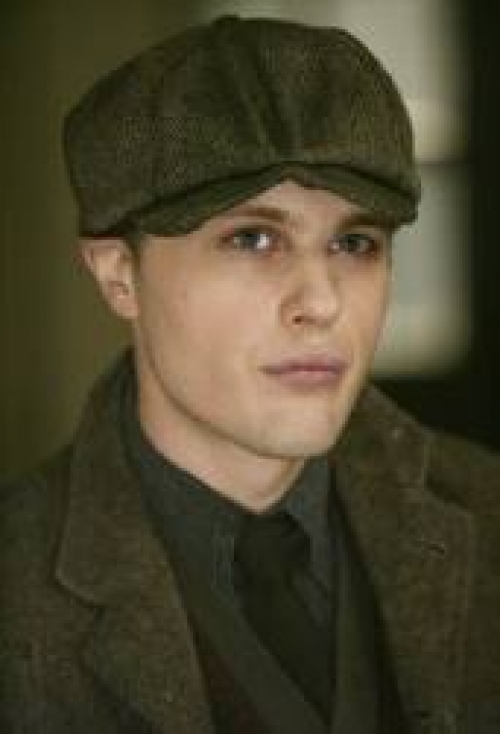

Can you believe all of the novels being made into TV shows these days? New books by Jennifer Egan, Chad Harbach, and Karen Russell have already been picked up, not to mention the promise of a new series based on the novels and stories of William Faulkner. Will 2012 the year of literary television? Does television—and by "television," I also mean "the future"—only get better? Sure, novels have forever been adapted for the big screen, but has television ever seen this many books? In that spirit, I’d like to suggest my top five novels I would love to see on the small screen in 2012.
1. Crime and Punishment (Fyodor Dostoevsky). No one is really all that thrilled with Dexter anymore. Maybe it’s time to go back to the insecure, faith-tortured existentialists? There’s only one real murder, but hours of drunk Russians, confession, confusion, prostitution, destitution, cowardliness, callousness, salvation and defeat. Can you imagine the episode (dream-directed by Martin Scorsese) where Mikolka stumbles out of the bar and, with the crowd largely egging him on, beats the horse to death? This is something we need to watch. Michael Pitt can play Raskolnikov—I hear he’s free now.
2. Housekeeping (Marilynne Robinson). Full disclosure: mostly I just want to live in this book. I end up re-reading it because it’s kind of what I want my life to be. Strong but transient women, in a silent house in a town haunted and defined by a lake. There would be such silence! And Beauty! And small, dark moments where we could worry about our grip on reality!
3. Rabbit, Run (John Updike). Haven’t we absorbed enough darkly twisted misogyny and white male privilege from Mad Men? The answer is NO! At least I haven’t. I adore my spoiled brat man-children; the more time we spend exploring what’s wrong with them, the better.
4. Letters to Wendy’s (Joe Wenderoth). This has to be one of my favorite books of all time. Not your traditional novel, each entry could be fleshed out into its own episode—each episode an adventure at that copper-top fast food chain. There is philosophy, there are bodily functions, there is human need, there is meat.
5. Firework (Eugene Marten). Isn’t it time we return to the racist Rodney King America of the early nineties? When we worked in a forms warehouse, got caught up in some violence, and then ran away from it all on a road trip with Miss D and Littlebit? Wouldn’t it be great to have a pre-9/11 enemy again? That enemy being ourselves?
What novels would you like to see made into television? Any ideas on what would make the perfect miniseries? Share your comments below.
Photo: imdb.com

Where do the weird words of our world fall within the approval matrix of today’s writers? Do words like “lunule” (the ivory crescent of a fingernail tip) and “gynecomastia” (man boobs) poeticize or demystify the peculiarities of everyday life? In short, is obscure vocab savvy an in or an out?
Read More

I've never liked concerts where the performers sound exactly like they do on their studio recordings. Live performaces need spice and spontaneity. I want to see and hear a band take risks, explore some new territory, and challenge me as a listener. Otherwise, I'd rather stay home.
For this reason I was looking forward to jamming my way through Wilco’s first of five sold out shows in their beloved Windy City. It was a highly publicized homecoming for Chicago’s favorite Dad Rock band. Mural-sized posters on city busses. Ads on NPR. Official countdowns on local radio programs. But the show itself, while musically and technically accomplished, was, well…boring.
So boring, in fact, that the young woman sitting next to me fell asleep during nearly every song, only to wake up during the applause. A sharp contrast to the energy of the Kanye & Jay-Z show I recently wrote about. Perhaps the snoozer was only feeling the soporific spirit of Chicago Lyric Opera House (a pretty fucking cool venue for a rock show), or maybe she pounded too many PBRs before the show. Most likely, each Wilco tune lulled her to sleep.
Which was surprising given the "jam band" aesthestic Wilco's embraced since their 2004 release, A Ghost Is Born, with guitarist Nels Cline now leading the band into cacophonous maelstroms. But over the past few years these diversions have become perfectly scripted, well-timed (and well-rehearsed) events during their live shows. I wish the band would again explore those exotic spaces outside the riffs and solos we already know.
As James commented in his recent review of the Wilco boys’ latest effort, The Whole Love, the album tends toward “symphonic soft-rock.” Nothing spectacular, offensive, or terribly original. Which is fine for dinner parties and Volkswagen commercials, but pretty lethargic stuff for a live show. Especially when they kick things off with a 12-minute performance of the hushed and insanely repetitive “One Sunday Morning (Song For Jane Smiley’s Boyfriend).” Which also has to be one of the clumsier song titles of the year. “Oh shit,” I tell my friend. “This is gonna be a long night.” A night, in hindsight, I should've stayed home.
What the show really lacked was a true spirit of spontaneity—guitar solos that spiralled and splintered, challenging the band and audience to keep pace and anticipate what might come next. Instead, the audience was taken on a well-planned musical field trip, capably (and soberly) chaperoned by Tweedy & Co. (nobody’s ever accused them of being shoddy musicians). Sometimes the best field trips are the ones where the chaperones get drunk, the driver gets disoriented, and the bus goes careening down a dirt road towards some unknown end.
Photo: Hidden Track
 A Black Balloon Publication ©