Mutton Chops and Monologues: A Recap of Our First Reading
December 20, 2011

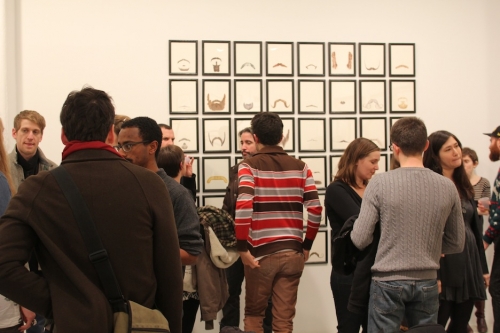
Is it self-destructiveness or something worse that compels me to start off a post about Black Balloon's first reading, an evening of facial hair-inspired fiction that (full disclosure) I helped put together and (fuller disclosure) I also read at, by saying that I'm not the biggest fan of literary readings?

Read More
Ben Marcus Has a Man in a Hole. Do You?

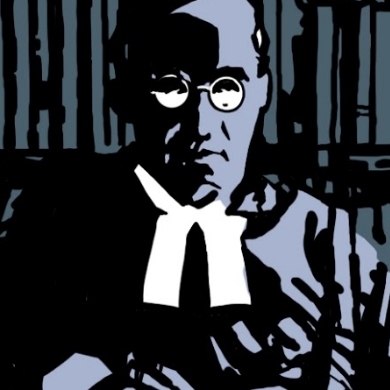
In a recent Harper’s interview, Ben Marcus (whose new book, The Flame Alphabet , is due out in January) mentions an idea that I’ve recently become obsessed with. The idea is that every writer has one essential story (also known as the "object") to tell—one fixation that must be explored again and again, revised and retold endlessly but never resolved.

For Marcus, the story is this: “A man is in a hole where bad things are happening to him.”

He explains that he has “to work to mask this basic fact,” work that I assume consists of the changes Marcus mentions earlier to style, tone, story or storylessness. I love this idea. If I could, without embarrassment, I would ask Marcus when he knew this story was the one. And yes, I would ask it with the same high-pitched giddiness a school girl asks about true love.

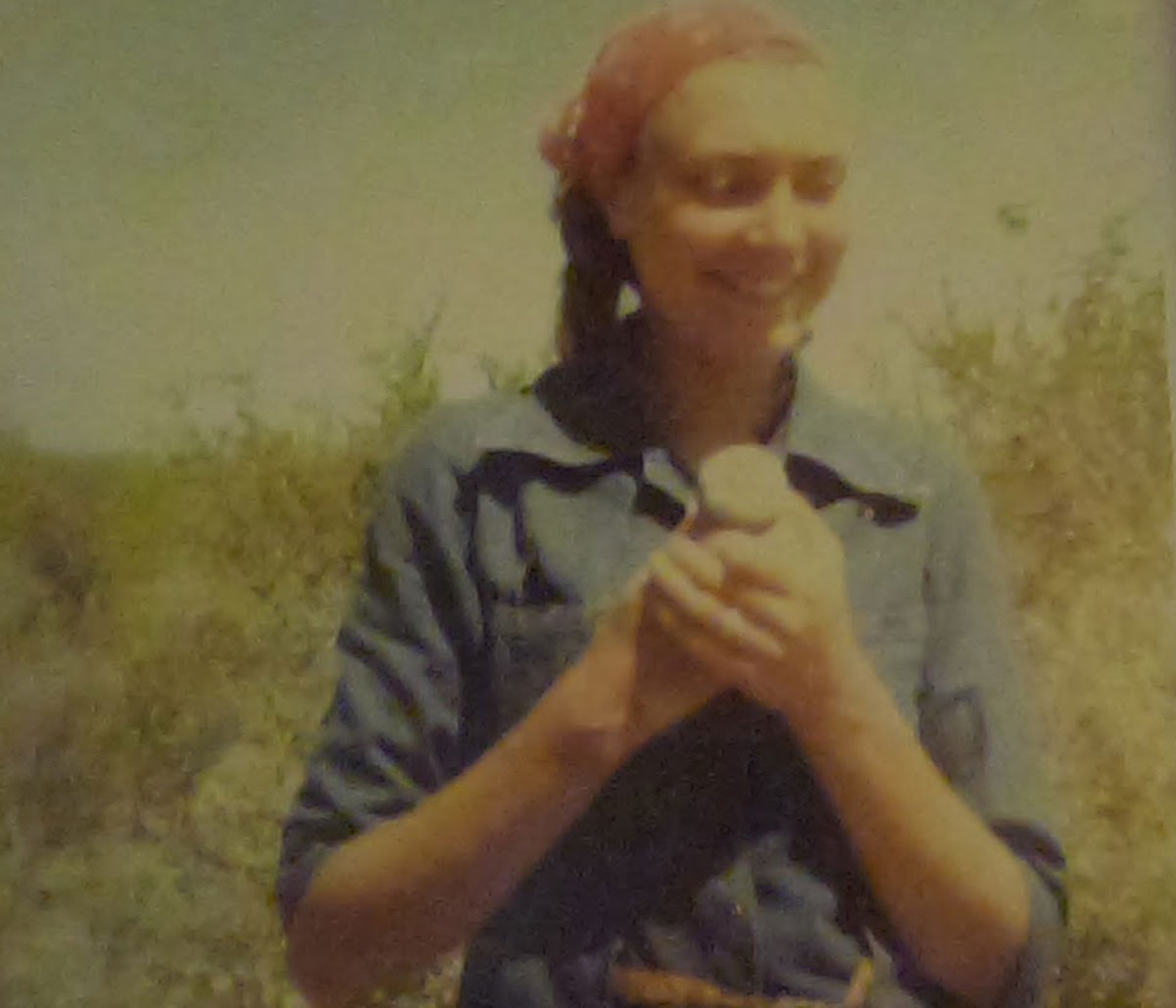
I’m familiar with the notion that all writers have their particular ticks—distinguishing characteristics that are separate from their particular style or voice. For me, it's hands. Hands show up all over the place in my fiction, touching things as a way of knowing, as reassurance. Why? Because hands are trustworthy, obviously. But the idea that they're part of my one story? Rather than feeling limited, I find the idea absolutely exhilarating. I’m not sure if I can entirely explain why, it feels both reassuring and stimulating. And I don't care at all if this idea is actually true or not; I’m still throwing myself in.

I understand that finding your story/object is a lot like asking the question, What’s wrong with you? Hours of psychoanalysis might actually be helpful in this pursuit. But could it be dangerous to know your story? As much as I’m fascinated by the idea, I’m also a little superstitious about answering the question. To miraculously behold my object? Then I’ll know what to do! Fuck. It’s almost like playing the field before getting married. I obviously date the same person again and again, but if I found the one I’d have to acknowledge this limitation in myself.

A part of me wants to know so I can just attack and attack and attack, but another part of me wants to keep my obsession to my subconscious, at least for a little while longer.

Photo: excursuses.wordpress.com

Read More
Kate Beaton, Great Gatsby, and Crepuscular Rays

The New York Times 10 best books of 2011 includes everything from college baseball to alligator wrestlers.

While the New Yorker goes way back and chooses a new translation of the Iliad.

Which isn't as risky as Time's choice to list Kate Beaton's Hark! a Vagrant as fiction.

Meanwhile, the Daily Beast re-discovers the Great Gatsby and Murder on the Orient Express.

And GQ and the Atlantic take up a couple slots on Longform's list.

With all these lists circulating, it begs the question: what makes something the best?

If you ask a writer, they'll probably start gushing about their fellow peers.

Though many of them seem to be blinded by the crepuscular rays of their own success.

So be careful what gifts you give to your writer friends this year—

You never know what kind of heavy-handed symbolism they may unwittingly suggest.

Photo: buzzfeed.com

Read More
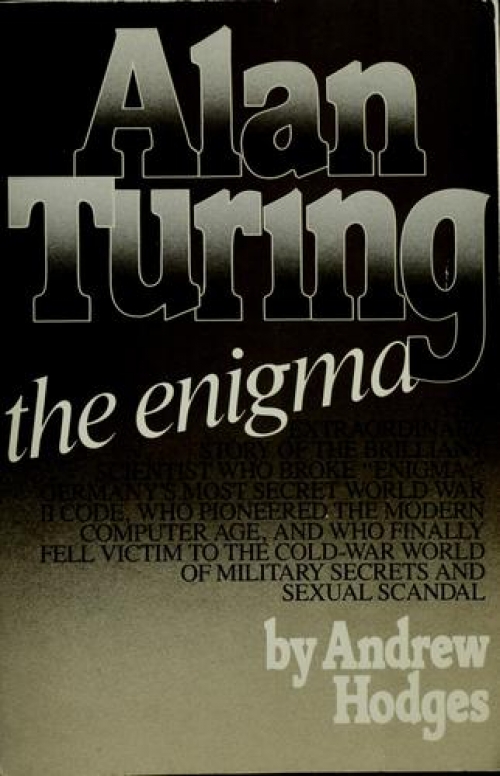
Gervais, Turing & Follow-Through Remorse
December 15, 2011

Ricky Gervais has a post up on the Daily Beast about the biggest regret of his career:

I was on holiday with my girlfriend Jane in about 1999 in Hungary (yeah, I know, odd choice, but money was tight). We visited this huge Victorian museum one day, and as I was walking round I had an idea for a movie in which all the exhibits came to life and started running amok ... Huge effects, an amazing spectacle. When we got back to our hotel room, I started writing the screenplay.

Read More
Ball So Hard Mothafuckas Wanna Fine Me: Kanye & Jay-Z Bring the Throne to Chicago

Until very recently I hadn’t popped my hip-hop cherry. My only foray into that world was via Girl Talk’s mash-ups, which is kind of like trying to score with your cousin: it just ain’t legit. But on the night of November 30, my cherry exploded in a fantastic ass-grinding soundquake at Kanye and Jay-Z’s “Watch the Throne” concert at Chicago’s United Center.

We arrived early to catch the unofficial warmup act: the flesh-fest on the mezzanine surrounding the arena. Tits and ass on parade. NFL players with their retinues, cruising. Hipsters with handlebar mustaches darting nervously through the crowd. South-siders looking skeptically at North-siders. And a couple of geeky white dudes watching it all go by. It was one of the most entertaining opening acts I’ve experienced, itself almost worth the insane $160 admission.

The show finally started. Kanye and Jay ascended on giant glowing cubes at opposite ends of the arena and the United Center was transformed into the Midwest’s hippest blinged-out, iPhone-illuminated dance club. It was also the largest crowd-generated ganja smoke machine I’ve ever known, the acrid haze casting a mystical blue aura around the two performers. They appeared like titans flaunting the spoils of their conquests (“Let’s get faded, Le Meurice for like 6 days / Gold bottles, scold models / Spillin’ Ace on my sick J’s.”).

I didn’t know the majority of the songs, but it didn’t really matter. More often than not, they simply instructed the crowd what to do: “Throw your diamonds in the sky!” “Lemme see your hands!” “Bounce!” They were the masters and we their kowtowing servants. Their charisma was majestic and totalitarian."You know how many hot bitches I own?!"

After 2 ½ hours and nearly 40 songs, Kanye and Jay wrapped up the show by playing “Niggas in Paris” eight times. (They played it ten the next night.) While audiences from Atlanta to Detroit have enthusiastically embraced this finale, it just reminded me of the time I heard a Dallas radio station play Vanilla Ice’s “Ice, Ice Baby” for an hour straight. I’d like to think Kanye and Jay were above such stunts, but I guess you gotta give the people what they want. Or what you think they want.

After their first pass through “Niggas in Paris," we headed for the exits—much to the astonished chagrin of our stoned neighbors and distracted security guards (“What? Where are you goin'? It’s not over!”). And as we walked out into the late autumn night we were pleased that we fled before the show devolved into a litany of repetition. Indeed, it was an overhyped show that celebrated its own hype. But it was hard not to be swept up in such a tidal wave of  narcissism, at least for a little while.

It had been an aggressive, but proper, deflowering.

Photo: Associated Press

Read More
Literary Manifesto Trapped by its Gloomy Doom Needs Smiley Face, Ass-Kicking

The White Review''s current issue has a stunning example of High Intellectual Preposterousness. Lars Iyer has written a manifesto calling for an acknowledgment of the end of literature:

The only subject left to write about is the epilogue of Literature: the story of the people who pursue Literature, scratching on their knees for the traces of its passing. This is no mere meta-gamesmanship or solipsism; this is looking things in the face ... It’s time for literature to acknowledge its own demise rather than playing puppet with the corpse.

Is he serious? This is silliness, this is absurd. From the style of the manifesto itself, it’s hard to judge whether he’s being satirical or sarcastic, or if he’s really asserting what he believes to be true. Manifestos are full of pomp and grandeur, drenched in language that is bombastic, declamatory. Iyer’s is no exception. So I hunted the internet in search of his true intention and found that no, he was not joking. In a  3AM Magazine interview, he elaborates:

It is not simply that the relationship between literature and community has collapsed, nor even that literature is no longer in contact with politics. For me, the meaning of literature itself—the very possibility of literature—has collapsed. Literature, like left-wing politics, seems impossible ... I can only say that it seems to me that literature has, in some fundamental way, run its course.

What does this mean, "literature has run its course"? Is that why Iyer's book, Spurious, is so interchangeable with his blog, Spurious? To me, this is like saying sex has been slain by pornography, that eating is over because of fast food. People will always fuck and eat. Fucking and eating aren’t destroyed by depravities and deformations in their use. Yes, there is history and influence and philosophy and modern practice and all the rest. But there is still choice and there is still necessity.

Literature does not die, there is no end in it, it is something we do.

Rather than spend more time in inquiry and exasperation over this high intellectual dreariness, I’d like to simply present some evidence to the contrary. For intelligent discourse concerning the interaction of literature and culture, primarily in terms of how some of the more powerful influences and gatekeepers of culture present literature, I suggest an interesting piece by Roxane Gay up at the Rumpus. To see the existence of a literary magazine partially initiated because “we are tired of hearing that literary fiction is doomed,” check out Electric Literature.  And to hear from a true professional about his interactions with the great beast of literature, I highly recommend this interview with Ben Marcus from Harper’s.

A quick glance at any one of these demonstrates that literature has not run its course, and, for a great number of people, does not seem impossible.

Photo: living.oneindia.in

Read More
Restrict that Shit: Science Says Your Brain Will Thank You

As much as I believe my intuition to be above reproach, it’s nice to have a little science come along to back my shit up. Days after I posted about putting things in boxes, I came across a vindicating Jonah Lehrer article in Wired: it seems that scientists have proven that restrictions trigger the brain to perceive on a larger scale and to conceive of a greater range of ideas, thereby boosting creativity. Thank you, science!

Now that imposing form (aka my favorite kind of restriction) has been sanctified as awesome by the brain masters, I feel compelled to push the envelope a bit further and bring in the frail, curmudgeonly matter of intention. To be clear: by form, I mean the shape of a piece of writing; the way in which content is organized on the page. It's easiest to imagine the imposed form of a sonnet, but any variety of form can just as easily be imposed on any piece of writing. You could set out to write a short story beginning every sentence with the letter Q. You could limit the syllable count in every paragraph, use only monosyllabic words, end every paragraph with a different color.

Now, imagine an idea of what you want to write about and an imposed form are fighting. Do you know who is going to win? Form. The answer is Form. Why? Because form owns you. Because form is more necessary to the achievement of beauty than some idea you had. Form takes that idea and makes it better—science says so.

As soon as an idea finds its way into language, it is trapped by the rules of grammar, coherence, effect. What is written supersedes the idea that compelled the language onto the page.

In other words, what is read are the words put down, not the intention behind those words. No author can whisper into the ear of every reader to explain what they meant. But this imposition, this forcing of an idea into language, in turn allows that idea to be explored, tweaked, and revised more fully. If I get the idea in my head to write about pancakes and how delicious they are, chances are, if I set up some limitations for myself beforehand, if I make the adventure of writing more challenging, I will be forced to enter more interesting territory.

Pancakes could achieve greatness. Pancakes could bring you to your knees. One of the greatest side-effects of form is that it’s likely to push intention further into an unexpected, delightful place.

Photo: coloringes.com

Read More
Faulkner, Beckett, and Denis Johnson

Did you know octopi are some of the smartest sea creatures?

Perhaps they could even master a correct granny knot.

Though I doubt even they would know how to adapt Faulker for television.

Well, if a Faulkner sitcom fails, there's always a poetic sonogram instead.

Since Beckett's written for the screen before, he could probably be of assistance.

Meanwhile, could this be the last of the Rose Reading Room at the New York Public Library?

Maybe they just need a few secret doors to keep things interesting.

It would make for a good bomb shelter for all those failed book bloggers.

Who would have plenty to occupy themselves with, what with all these fancy e-books coming out.

But how do they stack up to the best art and design books of 2011?

Denis Johnson, on the other hand, prefers poetry, particularly Donald Justice.

On a similar note, Ben Marcus talks about "trying to love and fondle" the writing process.

Let's hope Benjamin Kunkel has the same luck with his new play.

Image: Brandon Cole

Read More