



Bookstores seem to be thriving in Tokyo. I can't walk two blocks in any direction without seeing the cheery character for book, “本”. Those searching for the rare vintage edition or secondhand paperback get their fix in Jimbochō. This neighborhood lines one broad avenue (plus myriad side streets and back alleys) with tons of used-book shops. And as this is Japan, it's all about specialization, with paperback “general stores” outnumbered by closet-sized nooks crammed with French classics, music magazines, and hairspray-heavy '80s porn.
Kanda Kosho Center (named both for the Chiyoda Ward district and for the literal translation of used books, kosho) is Jimbochō's used-book gateway, nine floors of categorized havens kitty-corner from the train station. The handy placard posted adjacent to Kanda Kosho's lifts is of no use if you don't read Japanese, but no worries: poke your head into a shop, and even the skeeziest porn joint's owner won't give you a passing glance.
Want a three-volume set of The Fishes of the Japanese Archipelago, back-issues of Japanese-language rugby magazines (who knew??), or a monthly periodical pointedly titled Gun? Those can be had on the third and fourth floors, respectively. Miwa, the all-kids bookstore on 5, features Golden Books from an alternative universe, like “Oden-kun”, whose titular hero is an anamorphic daikon radish. Beyond the wonderful jazz and classical record shop crowning Kanda Kosho, the upper floors all house unrelated porn shops, their otherwise muted environs punctuated by the sharp crackle of individually-sealed plastic wrappers, as customers dutifully pull out and shove back periodicals like Cream and Scholar from overstuffed shelves.
Let's say you didn't find that specific skin-mag you so desired. You're totally in luck! A brief jaunt off Jimbochō's mainstream is Aratama Total Visual Shop (the “visual”, written in English, is a clue they sell lots of nude stuff) and its mirror-façaded, younger kindred. The latter is stocked almost entirely with bondage and fetish magazines, which surprised even this intrepid reporter in their diversity. Aratama the elder contains an encyclopedic array of AV photo-books and PG-13 gravure mags, but its achievement is a whole room of posters and life-sized cardboard cutouts of cuties. The addition of sealed, autographed photographs of various models (going for like $150-400 per 4x6” print) feels almost superfluous.
I can spend hours in Shinjuku East's Kinokuniya, the ferroconcrete bookstore behemoth that makes its shiny Manhattan cousin feel absolutely puny by comparison. But for those treasured and unique—yes, sometimes very deviant—finds, Jimbochō is the only destination.
Images: courtesy the author

Translators can be any number of things: imaginative remakers, clever conduits. They are invariably people who try to share the sense of the original but do so wrongly, in goodbad faith. Such is Antigonick, Anne Carson's new translation of Sophokles's Antigone, a version for people who don't read Greek, don’t veil themselves in the manner of the ladies of antiquity, are not eligible members of the nonsensible chorus, but have read Hegel’s remarks on unmatched justices and (snotty children) assume some things about matching them right.
Antigone, the character, is a hard target. She’s moved so much that she no longer moves at all, undead but buried and constantly dug up again, a fixture of antiquated academic culture obsessed with dust. There are paintings in Antigonick on nice vellum pages that overlay the text—which seem to be handdrawn by Carson herself. Bianca Stone drew them in fact, while Robert Currie made text and image look nice together.
What information from the Greek source text is relevant? How can we relate to Antigone, who chanted a strange language and opposed her city's laws?
The problem of translation is the problem of meaning is the problem of wanting to share some sense in a world where, oh sweet gnarly luck, sharing said sense is like kissing a salt lick. Understandably, translators translate in distinct ways, but always to differing levels of failure. They can be faithful, trying hard to render, fideliciously, the flesh of the text body they're working. Or they can do as Carson does for Antigone: Paraphrase Beckett. Tell Kreon to fuck himself. Do what’s right. Then, die.
I’m sorry, there was something about justice?
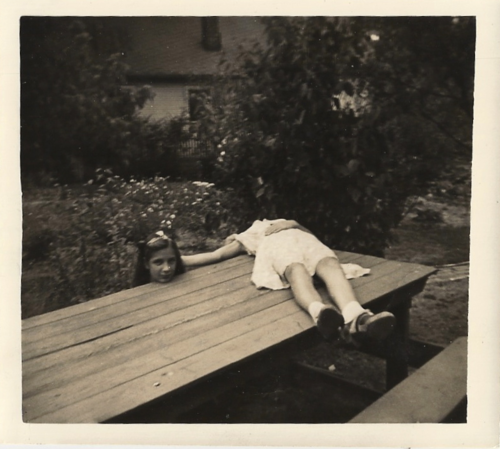
Image: Black and WTF


1.
It’s an old story: Antigone decides to bury her dead brother and break the city’s law; for her contravention she is immured in a cave. And soSophocles’ Antigone mesmerized its Grecian audiences—so much that he was made a general in Athens’s battle against Samos.
2.
It’s a new story: Nizam pushes a cart across miles and mountains to recover and bury her dead brother and rescue him from the American militarymen who think him a Taliban figure; during her struggle she is left in a desolate stretch of the desert. And so Joydeep Roy-Bhattacharya’s The Watch calls forth the old story in a different guise, bringing to life lieutenants and captains on the battlefront.
3.
But of course Nizam is not quite Antigone, nor is Masood, the interpreter, exactly Ismene. In the new story, Creon is generalized from a lone figure to the entire military-industrial complex. The soldiers struggle to support the system into which they were indoctrinated, and their all-too-human experiences overwhelm their dispassionate training. As they watch Nizam, they worry for her, and realize they cannot see things in the black-and-white, allegorical terms they’re supposed to.
4.
“He walks over to Masood and says: Please convey to her that our business with him is not finished.
She replies: He is dead. What business can you possibly have with a dead man?
Tell her that her brother was a terrorist, a Talib, and a bad man.
That isn’t true! My brother was a Pashtun, a Muhajid, and a freedom fighter. He fought the Talib. And he died fighting the Amrikâyi invaders. He was a man of courage.”
Good and bad are hard labels to affix, and even harder when all you know are us and them.
5.
“The decade-long war in Afghanistan is America’s longest war, Britain’s most expensive war since World War II, and NATO’s first major war outside Europe,” Joydeep Roy-Bhattacharya writes, before detailing the casualties per Western country. Where are the statistics on the local people who died? The Pashtuns, the Talibs, the many other peoples who live oceans and deserts away from the United States? How are they recognized in our media, if at all?
6.
Sometimes, the chorus in Greek plays would come onstage by walking down the steps of the amphitheaters, as if they had up until then been a part of the audience. In the same vein, the American men speak from their homeland as well as the theater of war. Their past memories mix with the present moment; the First Sergeant moves in his thoughts between his family in Louisiana and his platoon in Afghanistan. If they can call themselves part of the audience, then should we readers call ourselves part of the chorus?
7.
“It's about as cogent an analysis as anything you'll find about where we are today,” the Lieutenant says to the Captain of Antigone, handing him the play to read. I felt within Joydeep Roy-Bhattacharya’s pages a carefully attuned mind examining and analyzing all sides of the Afghanistani debate, an attitude found less frequently in fiction than in drama. It is a relief to hear it again in this novel, as the boundaries blur between good and bad, between new and old, between audience and actors, between them and us.
image credit: boston.com/bigpicture/


On July 27, the Olympics will start in London. My friends there are actually going elsewhere for the full three weeks of tourist and media frenzy. They just want to enjoy their summers, and watch the occasional swimming match on TV.
They’re also escaping the most Orwellian set of circumstances I’ve heard about in ages. Kosmograd, whose handle recalls a formerly totalitarian country, describes the rise of the “Brand Exclusion Zone,” which stringently enforces brand purity for the Olympics’ official sponsors. The goal is to prevent ambushes by other brands and to restrict brand exposure solely to companies that have paid millions of dollars and pounds and euros for advertising rights.
As a result, visitors wearing clothing or carrying items with the logos of rival brands will be barred from entering the games. Athletes and spectators are not allowed to upload videos of their own, which would compete with television broadcasts. These restrictions exist in both space and time, “up to 1km beyond [the Olympic Park’s] perimeter, for up to 35 days.”
Freedom of speech is a popular right, and one of the most easily contested. The issue becomes even more complicated when companies and individuals clash. But in this case, I feel uncomfortable at how rigidly the IOC is suppressing other voices. And when I think of the tyranny of brands, I think of Banksy:
“Any advert in a public space that gives you no choice whether you see it or not is yours. It’s yours to take, re-arrange and re-use. You can do whatever you like with it. Asking for permission is like asking to keep a rock someone just threw at your head. You owe the companies nothing. Less than nothing, you especially don’t owe them any courtesy. They owe you. They have re-arranged the world to put themselves in front of you. They never asked for your permission, don’t even start asking for theirs.”
(Viz the graffito by Criminal Chalkist, above, of a vigilante running off with one of the Olympic rings. I presume the IOC ordered all graffiti removed shortly thereafter.)
It’s true that London competed with many other cities to host the Olympics in 2012. They’ll benefit from the extraordinary influx of money, from the massive public works projects and increased media visibility. But at what cost? What will be lost by accepting the IOC's draconion rules?
When I read George Orwell’s 1984 in high school, I was fascinated by its ironies: the Ministry of Peace keeps Oceania at war, even the Ministry of Truth perpetually lies to maintain a consistent history. I took heart in how the very final page, an essay about that regime’s language, was written in the past tense. But here we are in 2012: now the Brand Exclusion Zone maintains brand purity by constantly fighting off other brands, and polices the Olympic athletes’ own Twitter accounts for brand infringement. What role have we played (and should play) in this fulfillment of Orwell's prophecy? How is it that London, the fictional capital of Airstrip One in1984, has let itself be seized in real life by Big Brother?
image source: kosmograd.com


Tin House has an excellent post up with many fantastic writers confessing their pre-writing rituals. From Jim Sherpard’s even numbered emails to Janice Erlbaum’s horse porn, I can’t help but grin at the perfect bedlam of obsessive compulsions and pure superstition in the attempt to drill productivity and inspiration into one’s head. Of course, such habits and rituals can’t help but extend into the day beyond when the writing’s done, so I thought it might be useful to compile a small exposition on how writers behave beyond the desk.
How writers navigate the grocery store. The writer doesn’t know which piece of paper has the grocery list on it. Or there’s more than one list on several different pieces of paper and the stress of finding these pieces of paper is just too much, so the writer proceeds to the store without such a list. The writer chants what he/she believes to be the list in his/her head while wandering the aisles. In the produce section, the writer becomes distracted. Slightly euphoric but nervous. There are items here the writer lusts after that are not on the list. But they are shiny. It is here the writer thinks, "Fuck. Look at this piece of fruit. Nothing I will ever create compares to the perfect beauty of this pomegranate. I can’t even afford pomegranates. Fuck." The list is forgotten and the writer leaves with one can of tuna and tomato paste, loose almonds rattling in the writer’s pocket that he/she has no intention of paying for.
How writers decide which clothes to wear. If the writer is only sitting at a desk and writing, then the writer wears whatever the writer went to bed wearing the night before. If the writer has to go out—to the grocery store, for example—the writer will simply put a coat on over these work-slash-bedclothes. If it is too warm to wear a coat, the writer might go so far as to put on a bra. If the writer has a special occasion, like a night on the town, the writer will apply deodorant and sniff around for a clean shirt with a minimal amount of holes and stains. If the writer has to attend a job interview or a wedding, clothes will be borrowed from a friend.
How writers behave at restaurants. The writer will order a beverage in a prompt manner, knowing beforehand what he/she likes to drink. The writer does not deviate in the selection of beverages, though will order different beverages depending on the time of day. The writer is probably alcoholic. Ordering food is a far more complicated and drawn-out affair. The writer will smile and fall slightly in love with his/her server, as the server quickly becomes the writer’s navigational savior in all matters. It is only when the writer has had too many beverages to see clearly and yet senses the server’s impatience that the writer will beg the server to decide what the writer should eat. The writer will tip extravagantly. If the writer happens to sit at the bar, the writer will not accomplish the task of eating but will stay until the bar closes and then go home with the bartender, whom the writer is now deeply in love with.
image: dria.org


Mid-May through end of June, graduation presents are flung to young people like so many palm fronds under asses’ feet. It's been a while since I've had a successful encounter with an institution of booklearnin', but I remember getting Zen and the Art of Motorcycle Maintenance when I finished high school. Never mind that subsequent studies disinclined me to take Pirsig seriously; I read his book when I got it and dreamt of cycling across the plains with nothing but a tent and my meager late-teenage wits.
People like to wrap books up for grads. There's something about it that’s less crass than a sappy card padded with cash or stiffened with an Applebee's gift card. Books enrich, even if they were purchased off a display table with a GIFTS FOR GRADS placard on it. And booksellers love to promote graduation books: they’re part of a spring giving trifecta, along with Mothers’ Day and Fathers’ Day, that gives a major boost to sales. Way back in ’97, Publishers Weekly noted that this growing “holiday-ization” of book sales—employed mostly by chains, but also by your beloved indies—had helped make May and June the best sales months behind the Christmas season.
Which is only natural. We purchase because we love, y’know.
Now, fifteen years after the industry woke up to its own practices, bookshops are bursting with that vanilla version of graduation gifting, Oh, the Places You’ll Go! Dr. Suess's book is supposed to be whimsical, apt, indicative. This cynic doesn’t much think OTPYG is much of the latter two, but it does jiggle with whimsy. And cliché. Because (some) folks take graduation as a cultural milestone that suggests a future wide open with potential greatness and achievement. It’s a token way of saying, "You're destined for great things!" And all the while it affirms the aspirations of a generation of egotists assured they will get exactly what they want, cuz they deserve it. (Never mind if we’re all that way from eighteen to twenty-two.)
But let’s talk about the grad on your list. Let’s say you want to let them know that you actually have given some thought to the unique qualities that make them a human being, qualities that will deepen over the course of their life and make them as pleasant and savory as pi dan. In that case, get them a book that fits with those traits! Not one that was intended for five year olds!
If you haven’t given thought to your giftee's unique qualities, don’t despair. The trick is to not aim at producing easy happiness or honing in on whatever they’re enthusiastic about this year; that shit fades. Instead, giveMiddlemarch. Or Moby-Dick. By the time they get around to reading your book (if they ever do), its emotional complexity and portrayal of life's twisted course will make the sweetest sort of sense it can—that it doesn’t have to.
And in the interim, the book's spine will make your loved one look that much more intelligent whenever their houseguests are looking for the bathroom.
Image: flickr user David Bivins


The Millions' Bill Morris may wax poetic on one-word book titles, but I don't love 'em. Irvine Welsh triumphed with his drug-fueled, dialectically impenetrable debut Trainspotting. But then the one-worders kept coming, like a never-ending belch, from Filth and Glue to Crime and the spanking new Skagboys (available to us Yanks in mid-September).
Why? Morris notes “at their best, one-word titles distil content to its purest essence, which is what all titles strive to do, and then they stick in the mind.” This suits Nobel Prize-winner Orhan Pamuk's Snow, whose austere title foregrounds its melange of political discussions and cultural tensions in a northeast Turkish town. By Morris' reckoning, Snow might be filed under “Place Names That Drip With Atmosphere” or “One Little Word That Sums Up Big Consequences” (a blizzard shuts down the city, sparking dialogues between the narrator and various revolutionaries that nudge the plot to full throttle).
A quick scan of my bookshelves yields another category: made-up words. Jam several novel-related concepts into one tasty idiom, linguistics be damned. Cyberpunk is notorious for this, though I give props to William Gibson's Neuromancer. It's a perfect amalgam for protagonist Case's virtual-reality hackings and...well, the book is totally romantic. Not just razorgirl Molly Millions, but the grimy, metallic, neon future itself. Tokyo on steroids.
Franz Kafka's Amerika deftly encapsulates a young European emigrant's warped stateside wanderings by distorting the title's spelling. This was actually literary executor Max Brod's doing: the working title was Der Verschollene (The Man Who Disappeared). Kafka's other novels, The Trialand The Castle, require their definite articles: the former personalizes Josef K's prosecution and subsequent tribulations—his “trial”—while the latter makes that inaccessible fortress physical to the alienated land surveyor.
This grave importance of “the” and “and” prevents further whittlings down of other titles. I might shorten Fyodor Dostoevsky's final classic The Brothers Karamazov to simply Karamazov, considering the notoriety of that name. As Makarov explains early on: “The whole question of you Karamazovs comes down to this: you're sensualists, money-grubbers, and holy fools!” But Crime and Punishment requires that “and”, balancing cause and effect. LikewiseThe Idiot, as excising that “the” might cast it the way of habitual singularizer Chuck Palahniuk (see: Choke, Rant, Pygmy et al.).
Fine. One-word titles can work, but something must be said for wordy ones. Isn't there charm within Douglas Adams' Britishly prolix The Hitchhiker's Guide to the Galaxy and—my personal favorite—The Restaurant at the End of the Universe? Even the briefest, Mostly Harmless, requires both words for the Guide's cheeky description of Earth. In this sense, Adams' debut “could” be truncated to The Guide, but that pesky “the” is mandatory. It's not justany guide, after all.
Image: courtesy the author
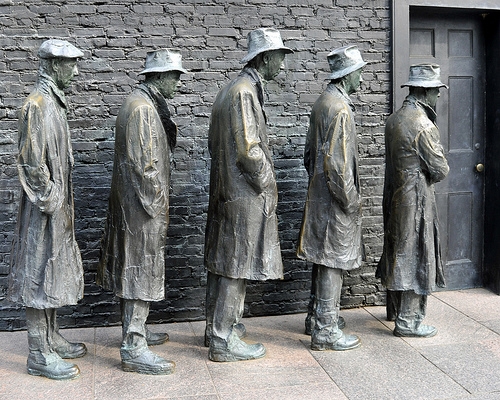
According to a highly dispiriting article in the Chronicle of Higher Education, "the percentage of graduate-degree holders who receive food stamps or some other aid more than doubled between 2007 and 2010."
Read More

An article in yesterday's New York Times explored the Obama administration’s “top secret ‘nominations’ process to designate terrorists for kill or capture.” The president remarked that the youth of the nominated has moved us into a “whole different phase.” In 2007, Judge Peter Beaumont called 17 year-old Samina Malik, also known as the “Lyrical Terrorist,” a “complete enigma.” And in a 1987 review of Naipaul’s Enigma of Arrival, Salman Rushdie suggests that the answer to the riddle is the one thing that must never appear in the riddle itself.
1.
“The mug shots and brief biographies resembled a high school yearbook layout. Several were Americans. Two were teenagers, including a girl who looked even younger than her 17 years… ‘How old are these people?’ [President Obama] asked, according to two officials present. ‘If they are starting to use children,’ he said of Al Qaeda, ‘we are moving into a whole different phase.’”
—Jo Becker and Scott Shane, “Secret ‘Kill List’ Proves a Test of Obama’s Principles and Will,” The New York Times, 29 May, 2012.
2.
“We are told of a dream of an exploding head, of ill health, of family tragedy. There may be more to it. I think it was Borges who said that in a riddle to which the answer is knife, the only word that cannot be employed is knife. There is one word I can find nowhere in the text of The Enigma of Arrival. That word is 'love,' and a life without love, or one in which love has been buried so deep that it can't come out, is very much what this book is about and what makes it so very, very sad.”
—Salman Rushdie, “A Sad Pastoral,” in The Guardian, reviewing V.S. Naipaul’s The Enigma of Arrival, 1987.
3.
Following the verdict, Judge Peter Beaumont QC, the Recorder of London, told Malik: ‘You have been in many respects a complete enigma to me.’ She had posted her poems on websites under the screen name the Lyrical Terrorist, prosecutors said…The court also heard she had written on the back of a WH Smith till receipt: ‘The desire within me increases every day to go for martyrdom.’ Malik said she had only called herself the Lyrical Terrorist ‘because it sounded cool.’”
—BBC News, “Lyrical Terrorist Found Guilty,” 8 November, 2007.
Let Me Recite What History Teaches (LMRWHT) is a weekly column that flashes the gaslight, candlelight, torch, or starlight of the past on something that is happening now. The citational constellations work to recover what might be best about the “wide-eyed presentation of mere facts.” They are offered with astonishment and largely without comment. The title is taken from the last line of Stein’s poem “If I Told Him (A Completed Portrait of Picasso)."
image: Giorgio de Chirico, The Enigma of Arrival and the Afternoon, 1912, via wiki-paintings.org


Virgina Woolf lives on in strange ways. She and Leonard Woolf startedHogarth Press in 1917 to publish themselves as well as their colleagues in the Bloomsbury group. Woolf published some of her most radical and explicitly feminist titles, including Mrs. Dalloway, under this aegis. By the 1940s, however, the press was defunct. And now, Lazarus-like, Hogarth has returned, thanks to Chatto & Windus in the UK and Random House in the US. So will this new incarnation, with such a loaded name and history, be able to shine a light on contemporary gender issues the way Virginia Woolf did almost a century ago?
I decided to read the first two books published by the new Hogarth to find out. And, as a male reader, I was surprised by the different ways Anouk Markovits’s I Am Forbidden and Stephanie Reents’s The Kissing List illuminated the experience of being female in our time.
I Am Forbidden is the story of two sisters within one of the most deeply Orthodox sects of Hasidic Judaism, Satmar. In this world, religion dictates which books they may read, which men are qualified to marry them, when they are permitted to have intercourse. As one sister decides to leave the fold, I waited for the author to take sides. But Markovits does not choose; she simply tells the story of both sisters, focusing on the complications and strains of each path. How can a barren Satmar woman ever hope to bear children if her husband is not permitted to spill seed outside her body, even for the medical tests that could determine the cause of their infertility? Somehow, Markovits is able to show how each character’s outlook prevents her from accepting the facile solutions I might have offered as an uninformed outsider. If fiction is about helping us understand other people, Markovits has succeeded brilliantly.
The Kissing List, on the other hand, is wholly urbane, following a group of four girls through years and cities in a set of linked stories. Like a Sex and the City for twentysomethings fresh out of college, the stories circle around failed relationships, imperfect jobs, and the enduring value of friendship. In each story Reents adopts a different style, from straight first-person narration to email memos and multiple-choice questions. Virginia Woolf would have applauded both their sexual freedom and Reents's stylistic liberties, but I finished the book confused by how these women couldn’t solve their own problems. They were self-made, yes, but they hadn’t found a stance to champion. "Is this what it’s like to be a female today?" I asked a few of my girl friends. I hoped my befuddlement wasn't just due to differences in plumbing. Sadly, they all nodded.
In A Room of One's Own, Woolf discusses androgyny in the mind of the author: “it transmits emotion without impediment...it is naturally creative, incandescent and undivided.” I may have seen that incandescence more clearly in I Am Forbidden than in The Kissing List, but the fact that these books breathe new life into these questions makes me optimistic for the future of Hogarth Press.
image credits, L to R: modernlitclub.blogspot.com; goodreads.com; goodreads.com
 A Black Balloon Publication ©