


Are you on the list of things Morissey hates? Congratulations, you're in good company.
Even the sainted writer that is J.K. Rowling could end up on the list if the Moz finds her latest book not up to snuff.
Perhaps if he kept his firey hatred a secret, the world would be a better place.
In fact, whole galaxies, even newly discovered ones, could benefit from the occasional act of decency.
Or maybe they can just copy Ghana and even make funerals a joyful affair.
If anything, it's a better idea than building an underground park with no natural sunlight.
Then again, the idea could work if you had the right cocktail and novel at hand.
And while we're on that note, why not introduce the pay-what-you-want model to bars as well?


Zadie Smith, in a recent Granta interview, mused that "the problem of life is basically: I only have one and it moves in one direction. People tend to seek all kinds of solutions to that dilemma, and the anonymity of technology has offered us a new kind of 'out.'"
I scribbled this on a piece of paper, so that I could see those words when I wasn’t working on my computer, and thought about my own novel. As I write it, I'm obsessed by the question of identity: how the self is defined, and divided.
I was once asked why my bookshelf had barely any titles published before 1950. My answer, then and now: I'm less interested in the theodicy of The Inferno or the social mores of Madame Bovary than I am in the perceptual miasma of American Psycho and the personal struggle for authenticity in Tom McCarthy's Remainder.
The philosophers to read on personal identity and the self — Derek Parfit and Thomas Nagel and Galen Strawson — are on my shelf, too. They all discuss identity from a personal point of view. Take Parfit’s thought-experiment: If I am perfectly replicated, down to my memories, on Mars, and my original Earthbound body is simultaneously destroyed, is my identity — memories and consciousness and all — continuous from one body to the other? (For the answer as well as further complications, read part 3 ofReasons and Persons.)
My question isn’t Am I the same person in these cases? so much as Do other people think I am the same person?
These problems are at the heart of Smith's novel, NW. They're not new problems, but she presents a relatively new solution: the Internet. Her characters change names, take on new virtual identities. The inverse, identity theft, is just as compelling: Dan Chaon's Await Your Reply (and let's not forget The Talented Mr. Ripley) exploits the divide between the self we experience and the self other people perceive.
Whether multiple people are occupying the same identity, or one person is shifting between many identities, the allure for readers is the same: the inside does not match the outside, and one person has to struggle to keep up — or confront — the lie.
We keep reading because we believe the truth will out. Oedipus is one of the oldest stories of mistaken identity, and we feel weirdly vindicated when the king realizes the real relationship between himself and Jocasta. But it took gods and prophets to bring out the truth; we have no such props in the arsenal of postwar fiction. We are more like The Man Who Folded Himself, watching helplessly as the same person splits in two, four, a hundred...
So we wait and watch for our characters to betray themselves? I certainly do. I want Adam Gordon in Leaving the Atocha Station to admit that he does not know Spanish. I want Patrick Bateman in American Psycho to realize whether he is hallucinating or not. I want Julius in Open City to acknowledge the horrible act his old friend accuses him of.
I want the truth; I suspect we all do. We want to see two lives collapse back into one. Maybe it will show us how to collapse the identities we, too, harbor.
image: thegreatbookslist.com

If brevity is truly the soul of wit, then your Twitter feed is the Algonquin round table of today's digital Dorothy Parkers and Ogden Nashes. Here's a selection of our favorite tweets from the week; nominate yours by submitting to @blackballoonpub with #twitwit.









Wye Oak's show at Music Hall of Williamsburg last week got me thinking about the potent layers of the human voice — its power to bind together sound and sense. Join me as I search for connections between boozy Irish folk songs and indie rockers covering Aaliyah.
Read More

A weekly series that explores a featured theme by pairing classic quotations with urgent images. What recent news items inspired these textual/visual sets? Leave your guesses in the comments, and check back next Wednesday for the answers.

“Hell is other people.”
—Jean-Paul Sartre
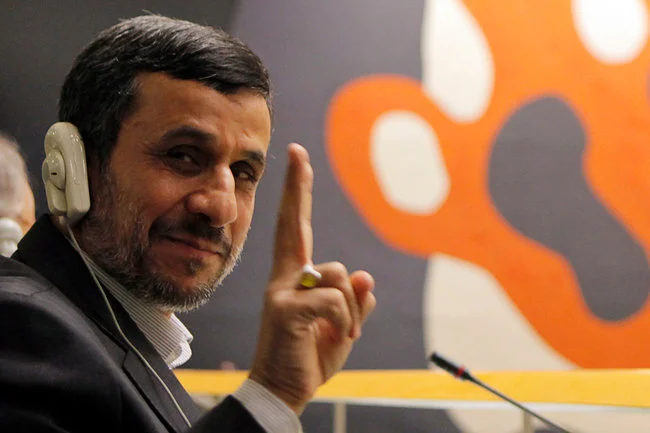
“Unexemplary words and unfounded doctrines are avoided by the noble person. Why use them?”
—Dong Zhongshu

“The mythology of Einstein shows him as a genius so lacking in magic that one speaks about his thought as of a function analogous to the mechanical making of sausages.”
—Roland Barthes

“Every man has a right to utter what he thinks truth, and every other man has a right to knock him down for it.”
—Samuel Johnson
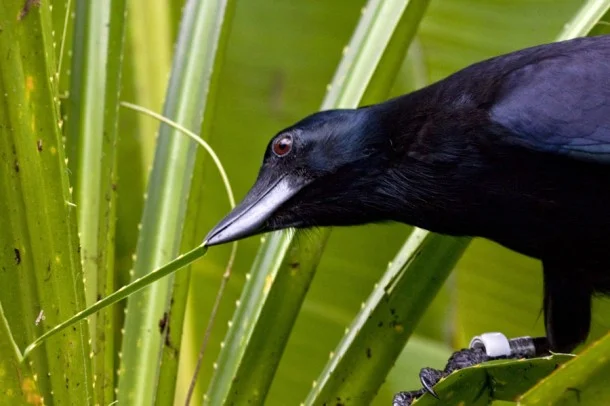
“Man has great power of speech, but the greater part thereof is empty and deceitful. The animals have little, but that little is useful and true; and better is a small and certain thing than a great falsehood.”
—Leonardo da Vinci
See the connections? Write your guesses in the comments — and feel free to leave your own "uncomebackable" quotes — and check in next Wednesday to find the headlines that inspired these pairings.
Images: faniq.com, NYTimes, sfgate.com, NYTimes, pnas.org
Answers to last week's installment:
- "The Many Garbs of Gaga" (InTouch)
- "Letter to a Young Critic: William Giraldi Defends True Criticism" (The Daily Beast)
- “'I’m Dreaming of a White President': Randy Newman on His New Song" (Slate)
- Brooklyn Book Festival Official Site (Facebook)
- "Riff Raff’s Got a Record Deal: Making Sense of the Most Viral Human Being in Music" (Gawker)
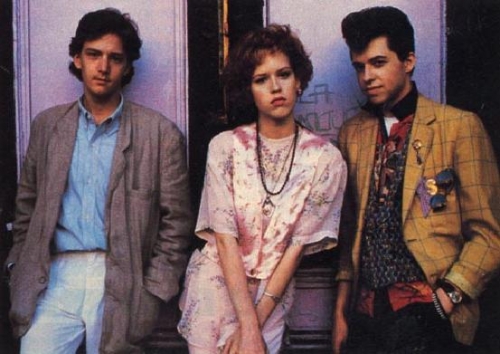

Molly Ringwald wrote a novel. Andrew McCarthy has just published a travel memoir. It seems inevitable to me that Duckie (or, as he probably prefers, Jon Cryer) will shortly follow suit with his own literary achievement. And I have an almost frighteningly clear premonition of how he will join the highbrow ranks of his Pretty in Pink co-stars.
It is my long-held belief that the "actors" in John Hughes' films always played themselves. How is Molly Ringwald any different from Andie — or, for that matter, Samantha (Sixteen Candles) or Claire (The Breakfast Club)? How is Andrew McCarthy, in the core of his being, distinguishable from Blane? And what has Jon Cryer been for the past however many years onTwo and a Half Men anything other than Charlie Sheen’s underappreciated, sensitive sidekick? I’ve never even seen that show, but I know Jon Cryer, essentially, is yearning and gets dumped on and continues to yearn and show up and be loyal and get dumped on. Pure Duckie.
And if the smart, pretty, kinda weird girl grows up to write sensitive family shit about flaws making us human, and the kinda dark misunderstood loner with abundant privilege anxious to truly connect with someone writes a memoir about travelling alone to reconnect with his fiancée, then Duckie gets to have his say, too.
So what better medium for an unloved, unwanted but loyal sidekick than science fiction? What better medium is there for Duckie to demonstrate the extent of his yearning than the imagining of impossible worlds? The effort alone will be pathetic: he’ll seem as though he’s trying to latch on to the sci-fi craze, and he’ll likely compare himself to Colson Whitehead. It will be so embarrassing for him and he will be so very earnest. And we will be touched, but more than that we will be embarrassed and quietly judgmental and feel so deeply relieved that we have not yet embarrassed ourselves so devastatingly as Duckie.
I dare Jon Cryer to prove me wrong on this one. Tell me honestly he hasn't seriously considered writing sci-fi. I think the publication of such a book is almost impossible to resist. It's a force of nature, an inevitability of the future John Hughes so painstakingly laid the foundation for. It would also be such an embarrassing catastrophe. I long for it to exist in the world.
image: heavemedia.com


New York might have its official celluloid clusterfuck and its punk-rock stepsister Film Comment Selects delivering highbrow cinema and cocktail-party fare (not to mention NYAFF and its ilk, screening beauties that only occasionally reappear stateside), but no film fest marries cultured screenings with good ol' gore and broken bones like Austin's Fantastic Fest.
My math skills are a bit...nonexistent, but check it: 70+ features play over eight days, plus countless parties, secret screenings, and booze a'flowin'. The Alamo Drafthouse — pairing grub and grog with movies since '97 — hosts this bonkers event. Hell, screening room #3 becomes the “Shiner Bock Theatre” during the festival, meaning free pint of namesake lager with each film.
"The nerds have completely conquered the universe. This is our world!"
—Tim League (Fantastic Fest founder, Alamo Drafthouse owner)

As I write this, I've seen “just” seven films. By the time you read it, I will have conquered 16. Somewhere in there, I caught the sound test for Dragon Sound's 25th anniversary reunion concert, karaoke'd in a Hulu-themed booth with a dozen Japanese guests. Time blurs in manifold waves during Fantastic Fest. Like, I think the autumn equinox just commenced. And I believe today, as I type this, is Saturday, but don't quote me on that.
“You are what you watch (and listen to); at Fantastic Fest, we are Motörhead.”
—Marc Savlov (Austin Chronicle)
Kicking off the fest, Tim Burton unleashed some stop-animation enchantment with the world premiere of Frankenweenie 3D. This included a special "Dog Theatre," where tux-clad pooches and their natty human "guests" took in the film. Karl Urban and Olivia Thirlby got my heart racing at the ensuing red-carpet for Dredd 3D. (NB. Back-to-back 3D screenings is an intense experience...but it helps when they contrast so nicely as poignant black-and-white Frankenweenie and ultraviolent, slo-mo stylizedDredd.)
“Fuck Christmas, Fuck Easter...Fantastic Fest is the greatest time of the year!”
—Luke Mullen (Fantastic Fest programmer, scribe for Film School Rejects)

Despite the fest's propensity for outlandish B-movie bijoux, there's a helluva lot of quality here. Last year, Michaël R. Roskam's debut Bullhead was shortlisted for the Best Foreign Language Film at the 2012 Academy Awards, after its Fantastic Fest premiere. Cannes mind-boggler Holy Motors plays this fest ahead of its NYFF premiere. And Adrián García Bogliano's scintillating Here Comes the Devil scored high-profile U.S. distribution via Magnet Releasing during right here in Austin fest. Bogliano and Fantastic Fest founder Tim League sabered a bottle of bubbly to celebrate.

More wildness awaits, including The ABC's of Death (one director and one creative kill for each letter of the alphabet!), an “extreme sushi” competition (before Dead Sushi's U.S. premiere), and this delightful gem from Chile called Bring Me the Head of Machine Gun Woman. Tune in next week for my huge-ass Fantastic Fest wrap-up!
Images: main image and Here Comes the Devil champagne sabering photo by the author; film stills via Fantastic Fest; Dredd 3D red carpet via Austin Chronicle

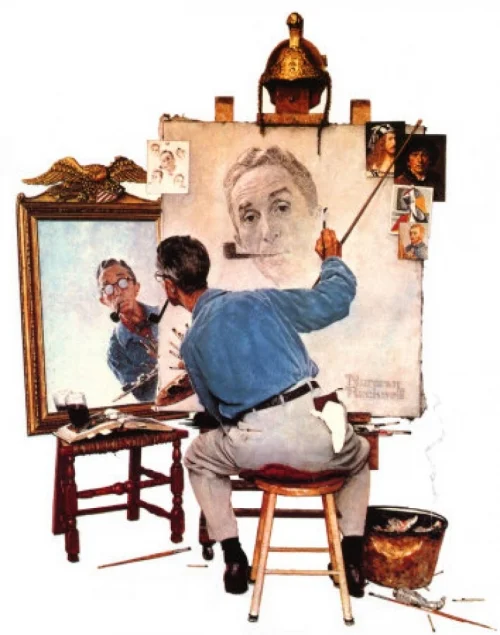
“There are twenty-seven different definitions of the self,” I heard Siri Hustvedt say at the Brooklyn Book Festival yesterday. “So you had better decide which one you want to use before going any further.”
It reminded me of that morning, when Sheila Heti and Karl Ove Knausgaard faced a throng of literati at a discussion called "Ice or Salt: The Personal in Fiction." James Wood had acknowledged the former’s “surfeit of empathy”in How Should a Person Be?: A Novel from Life and the “ceaselessly compelling” quality of the latter’s My Struggle: Volume One. And both writers spoke out in contrast to the versions of the selves they’d presented on the page: Karl Ove read from one of the more meditative, “authorial” sections of My Struggle, while Sheila focused on a letter between herself and the sado-masochistic Israel.
Hustvedt, who was also on the panel with Knausgaard and Heti, noted how their books, despite hewing closely to real life, used novelistic conventions. The very act of forming art necessarily deformed the life from which it was drawn. The other two novelists nodded, throwing their hands up in mock-resignation. (Laurent Binet should have been on the panel solely on basis of HHhH.)
One of the most common (and certainly the most frustrating) questions authors must answer is whether their fiction is autobiographical — and then they have to explain how, and where exactly, and of course why. But why are we so fascinated by this divide, or lack thereof, between an artist’s life and an artist’s work? Why did the line for this event teem with so many people that it filled the second floor and most of the first floor of the Brooklyn Borough Hall Courtroom?
Because we are confused about our many definitions of selfhood, perhaps?
In my college creative-writing courses, I read thinly veiled autobiographies of near-suicides or first heartbreaks. It was a way to talk about the event without judging the person who had lived it. But I preferred the direction Sheila and Karl Ove took. To paraphrase Yeats, they resisted the impulse topack the personal in ice or salt; they actually used their own names.
A great deal of what makes us human is our evident self-consciousness. Because of this, we can think about ourselves as seen by others, as doing things not yet done, as different from our present and living selves in age or body or action. We can think about ourselves as others.
We want to know whether our books' authors are writing about themselves, because we want to know if it's possible to live two lives, to escape the one in the world by setting another one down on the page. We want to imagine that these different definitions of the self actually mean different selves.
It's clear that Sheila Heti and Karl Ove Knausgaard have grappled mightily with this question, and maybe even made some peace with it. They see their literary personae as separate selves, old and no-longer-personal selves that do not need to be packed in ice or salt. What we read is, to them, just another version to add to the hundreds of selves already in their heads.
image credit: elbauldeguardian.com
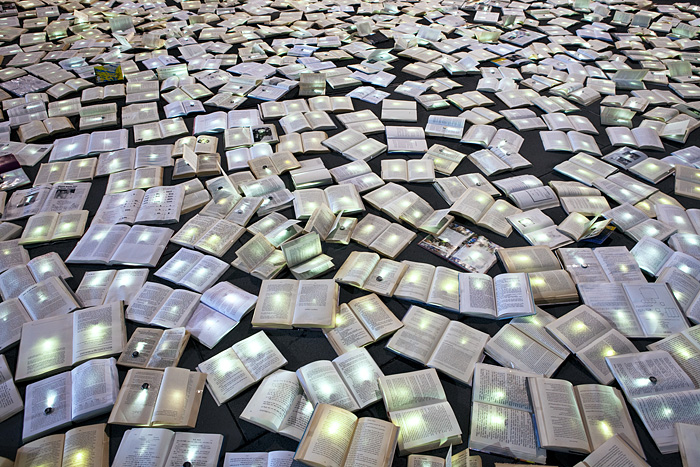
Got a group of lit-minded friends who love whaling? Why not join the Moby Dick Big Read?
And if you need a soundtrack for your reading, you could always go with the new Philip Glass production.
Unfortunately, you can't go around digging through the archives of Kim Video for any good listening.
But you could always try repurposing your current collection into works of art.
And if you have to do so in the buff, more power to you.
In fact, you'd be riding a bit of a literary trend, should you have the inclination.
Even then, you wouldn't be embroiled in as much controversy as Salman Rushdie at the moment.
So you can relax and wander the streets of Melbourne, looking for a good book to pick up.


"A protest song is a song that's so specific that you cannot mistake it for bullshit" —Phil Ochs
As we march past the one-year anniversary of Occupy Wall Street (or politely make our way around it), I’m reminded that nothing keeps a good protest going like music. Long before Tom Morello and Jeff Mangum played Zuccotti Park, musicians have been harnessing and amping up the power of the people in song. Here are a few personal favorites.
"Which Side Are You On?" (Traditional)
This union anthem’s central thesis never gets old. There may be some complicated situations in the current political climate, but really it all comes down to what I like to call the Star Wars test: are you on the dark side of the force, or are you with the people — the rebels and the workers, the downtrodden, the mothers, the regular folks against whom the system is most often rigged? Pete Seeger leads it off here:
"Bella Ciao" (Traditional)
Out west in the little town of Oakland, we have a radical marching band called the Brass Liberation Orchestra. Rain or shine, they keep protest crowds animated and motivated with their kick-ass brass action. Although they don’t play it much anymore, "Bella Ciao" is one of my favorite BLO numbers. The song was originally an Italian anti-fascist tune, and despite the language barrier it never ceases to get everyone singing along. Here’s a mostly English version by Chumbawumba:
Nina Simone: "Mississippi Goddam"
It feels almost wrong to try and write any words about this stark, furious classic. It’s that good. We should all bow down before Nina Simone, and listen as she lays the horrors of racism in America across her keyboards and pounds them out the way only a genius can. God damn.
Public Enemy: "Fight the Power"
It’s hard for me to separate this song from Spike Lee’s Do The Right Thing, in which it serves as a key narrative catalyst. Together, Lee and Public Enemy broadcast a potent cultural one-two punch that told America to wake up: racism is alive and well, and it's not going anywhere without a fight. As Chuck D says, "My beloved, let's get down to business."
Whether you love or hate its raw sound, riot grrl was the real deal, and this song is a chillingly straightforward “fuck you” to dudes who disrespect women. Hear it for the first time as a teenage girl, as I did, and you will never let misogyny go unaccounted for again.
Pulp: "Common People"
Okay, I wouldn’t technically categorize this as a protest song, but it’s an awesome, sneakily angry class-war fairytale. Brit-pop: dancin’ it out for the working-class since the fey 90s.
Bonus protest classics!
Woody Guthrie: "This Land is Your Land"
Phil Ochs: "I Ain’t Marching Anymore"
Sam Cooke: "A Change is Gonna Come"
Bob Marley & the Wailers: "Get Up, Stand Up"
Bob Dylan: "The Times They Are A-Changin’"
N.W.A.: "Fuck Da Police"
Billy Bragg: "Help Save the Youth of America"
Crass: "Do They Owe Us A Living"
Dead Kennedys: "California Über Alles"
…and about a million more. Leave your own faves in the comments. And then hit the streets.
Image: hiphop-n-more.com

 A Black Balloon Publication ©