


If brevity is truly the soul of wit, then your Twitter feed is the Algonquin round table of today's digital Dorothy Parkers and Ogden Nashes. Here's our favorite tweets from the week; nominate yours by submitting to @blackballoonpub with #twitwit.












As Alexander Chee recently wrote in a lovely essay for the Morning News, we should all definitely go to writing colonies as much as possible. But not everyone gets to chill at Yaddo with the lit stars. So how can a writer acquire that enviable writing-colony glow if she’s not experienced enough, lucky enough, or possessed of enough free time to chuck it all and head to the woods?
Good news: people, especially those who don’t fit perfectly into the traditional literary establishment (see also: women, genre writers, people of color, people with day jobs), have been writing for centuries without delightful daily lunch baskets waiting for them on the steps of their light-filled studios. People even write without MFAs, or Twitter followings! We write wherever we can, however we can, and we get our life stuff done and manage to keep on writing.
Here are a few suggestions for writers without a (free) room of their own:
1. Weekend Quarantine, otherwise known as “staycation.” We know, your apartment is small and filled with distracting stuff, and your roommate blasts Taylor Swift all night long. You know who has a nice apartment? Someone else. Ask a friend if you can swap places for a weekend. Keep your eyes peeled for housesitter gigs. Basically, try to spend a chunk of time anywhere that is different from the place in which you normally write. NB: Working in a café won’t cut it. You need space and quiet if you’re ever going to replicate that magical “I’m Only Here To Write” feeling.
2. Once you’ve scheduled a Weekend Quarantine (or its younger cousin, the Day-Long Writing Binge), take care of any creature comfortsbeforehand: Stock up on food and coffee, and pre-plan your meals. If you’re really persuasive, maybe you can get an elfin friend to deliver you a lunch basket, but leftover pasta will probably suffice.
3. Go to the library. Have you heard of these places? They’re amazing. They are full of books and electricity and you can get stuff done in there! And they are free.
4. One of the best things about colonies is the interactions you have with other artists while you’re procrastinating — er, processing. To get a hint of creative cross-fertilization, begin a writing session with some non-writing. If you write prose, read a poem; for a different view of the world, peruse a book of photography or paintings for ten minutes. And listen to music. (I prefer music without vocals — my go-to writing albums are Coltrane’s Africa Sessions, Chopin piano pieces, and anything Explosions in the Sky, Dirty Three, or Electrelane.)
5. Log onto your Facebook profile. Go to the little “account menu” arrow in the upper right hand corner (or wherever they’ve moved it lately). Choose the option that says “Account Settings.” Choose “Security.” Click on “Deactivate your account.” There, you've just cleared hours a day off your schedule.
Extra Bonus Pro Tip: Don’t sweat the scene. So you’re not besties with Andrew Sean Greer? So what. Suck it up and write, already.
Image courtesy the author

After an incredible meeting with Tumblr literary high priestess, Rachel Fershleiser, we are ready to unveil the shiny new Black Balloon Tumblr! On it, you'll find exclusive odds and ends from our books, outtakes from our blog, photos from events and parties, and anything worth reblogging from our literary friends and allies. To commemorate such an occasion, we've compiled a list of some of our favorite literary Tumblrs. Do yourself a favor and follow all these blogs immediately. Your cat-filled, Ryan Gosling-studded dashboard will thank you.
Title 2 Come: Gif blogs may be played out, but this literary-minded one is extremely relevant to our interests. Besides, any excuse to use this Ron Swanson gif is an Internet victory in our books.
Book Storey: For the extremely detail-oriented design bibliophiles, this collection of rare books will make you swoon. Recommended for people who spend way too much time in the Strand's Rare Book Room.
Fishing Boat Proceeds: YA author, John Green, is a Tumbly messiah, herding masses of “nerdfighters” to do outrageous things like register to vote and donate to Kiva. If you want to know that the kids are up to these days, jump on his bandwagon.
Underground NYPL: Forget the Sartorialist. This is the street style blog you want to be caught on. Subway riders reading, with the occasional e-reader thrown in for good measure.
Rachel Fershleiser: Obviously.
On the Strand: UK Penguin's Tumblr ain't the standard huge publishing blog. They post never-before-seen bits and pieces from their books, and if you're lucky you can catch an early glimpse of soon-to-be bestsellers, like they did with Zadie Smith's NW a couple of months ago.
The Collected Blurbs of Gary Shteyngart: Yes, he really did blurb this blurb blog. But this is handy to follow, should you ever need a crash course in book blurbing.
The Composites: “Images created using a commercially available law enforcement composite sketch software and descriptions of literary characters.” Either extremely beautiful or extremely upsetting, depending how you imagined Katniss Everdeen to look like.
Book Stalker: Again, obviously.
Bookshelf Porn: A visual case against e-readers.
Better Book Titles: One of the many Tumblrs that has went on to a (well deserved!) book deal but continues to post funny content.
Slaughterhouse 90210: Imperative for anyone who's ever wondered what would happen to the time-space continuum if Edith Wharton and Blair Waldorf ever crossed paths.
WORD and Housing Works: Two best bookstores on Tumblr. Extremely entertaining Twitter feeds as well.


Do you love reading but sometimes wish it were a little more social and a little less taxing on the wrists? Don't fret; just do a Big Read. There was Infinite Summer, when thousands of people read Infinite Jest, and Conversational Reading did a Big Read of Helen DeWitt’s The Last Samurai in 2010. And the latest, best Big Read is happening right now: Herman Melville’s Moby-Dick is starting a new life as a podcast. That means the dulcet voices of Stephen Fry, David Cameron, Tilda Swinton, and Simon Callow are all mainlining Melville’s words straight to your ears.
Feel like rising to Ahab's challenge? Here’s how you do it, in seven easy steps!
1. Accept & forgive your decades of Moby-Dick avoidance
“I’ve got too many other books.” “I wasn't that into Bartleby the Scrivener.” “I still hate my high-school American Lit teacher.” Or maybe you took that one English class pass/fail and realized that maybe you could pass without cracking that spine. One way or another, Moby-Dick got beached on your bookshelf. Perfect.
2. See a friend reading it and think seriously about picking it up
Maybe you just came off the heels of a terrible airplane novel and suddenly Melville doesn’t seem so terrible. Maybe you just want to sleep with that boy/girl with the oversized glasses and you need a reason to strike up a conversation. But don’t start the book yet. Baby steps.
3. Learn that Moby-Dick podcasts are happening and that David Attenborough and Benedict Cumberbatch are reading chapters
Read that again: David Attenborough. The dude narrated Planet Earth. Hell, he could read the chapters classifying different whales and have us riveted. Begin seriously considering reading the damn book.
4. Download the first podcast. Then the second. Then the third...
Okay, you’re committing to this. Just listen to Tilda Swinton intoning “Call me Ishmael.” Start out amused, quickly become addicted.
5. Get to Chapter 32 and briefly consider cancelling your internet service
Do whales actually have to be classified by size? Why are you listening to these overly detailed descriptions? Is this book even worth listening to? Ah, but herein lies the beauty of the Big Read: get on Twitter and ask everybody if you really need to keep going. Hear from various sources that yes, really, you should stick with it (and even finish the cetology chapter). Regain your belief that there's method to Melville’s mammalian madness.
6. Kill the White Whale
Four months and one hundred and thirty-five podcasts later, realize that you somehow did it. You read Moby-Dick. Wasn't it better than that terrible airplane novel? Did you hook up with the glasses-wearing friend? Who cares — this is one serious book crossed off your Lifetime Reading list. If you still have an apartment, pop a bottle of Champagne and toast your tenacity.
7. Go hunt another Big Read
Well? Did you think you were done? Look at your bookshelves. (You may take the bottle with you.) The Iliad is actually pretty awesome. And War and Peace’s two epilogues aren’t going to read themselves. Take a deep breath and pick one.
Go on, get cracking.
image credit: ocburbs.blogspot.com


A weekly series that explores a featured theme by pairing classic quotations with urgent images. What recent news items inspired these textual/visual sets? Leave your guesses in the comments, and check back next Wednesday for the answers.

“Music melts all the separate parts of our bodies together”
—Anaïs Nin

VLADIMIR:
Moron!
ESTRAGON:
Vermin!
VLADIMIR:
Abortion!
ESTRAGON:
Morpion!
VLADIMIR:
Sewer-rat!
ESTRAGON:
Curate!
VLADIMIR:
Cretin!
ESTRAGON:
(with finality). Crritic!
—Samuel Beckett (Waiting for Godot)

“The simplicity of your character makes you exquisitely incomprehensible to me.”
—Oscar Wilde (The Importnace of Being Earnest)

“Writers have no real area of expertise. They are merely generalists with a highly inflamed sense of punctuation.”
—Lorrie Moore

“Strange how potent cheap music is.”
—Noël Coward
Do you see the connections? Write your guesses in the comments — and feel free to leave your own "uncomebackable" quotes — and check in next Wednesday to find the headlines that inspired these pairings.
Images: InTouch Weekly, The Daily Beast, Slate, Facebook, Gawker
Answers to last week's installment:
- Einstein on the Beach (TimeOut New York)
- "Bob Dylan: Slavery's Legacy 'Holds Back' America" (Newser)
- "New Breed of Robotics Aims to Help People Walk Again" (NYTimes)
- "Pat Boone and Sheriff Joe’s Arizona ‘Birther’ Party Scrapped" (ABC News)
- "Most Offensive Protest Sign Ever Prompts Rahm Emanuel To Clarify He Doesn't Like Nickelback" (Slate)

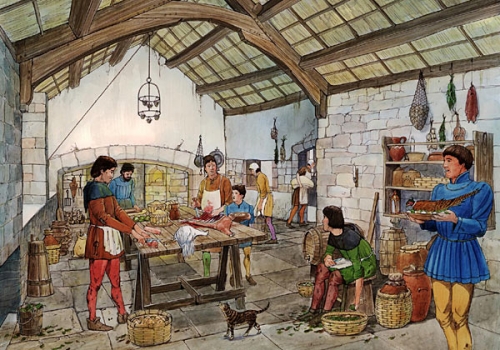
The New Yorker counted Britain's Lawrence Norkolk among Europe’s best young novelists way back in '98, and yet he’s never quite made it across the pond. Not that he lacks for singularity — his first book, Lemprière’s Dictionary, concerns the writing of the Bibliotheca Classica, while The Pope’s Rhinoceros describes in encyclopedic detail the quest to bring a rhino from West Africa to the Pope. (One can only imagine what Sharon Olds would do with this title.)
Norfolk's Shakespearean vocabulary and voluminous range of historical references don’t make him an easy read, but with his newest book, John Saturnall’s Feast, he uses them in service of a far simpler story: the coming-of-age of an orphaned kitchen boy who, through his skill in cooking, slowly begins seducing the lord's daughter. Never before have I read a book so laden with food — archaic food, pungent food, weird food. To give you a bit of the book’s flavor profile, here are a few of the delicacies I ended up researching. (Vegetarians: run for your lives.)

Forcemeat
The first step in preparing sausages, pâtés, quenelles, and other meat-stuffed dishes. Raw meat is emulsified with fat by being ground or puréed together. Forcemeats can be made straight without additional ingredients, country-style with liver and other spices mixed in, gratin with some of the meat cooked before emulsification, or mousseline with cream and eggs for a lighter texture.

Madeira Sugar
Sugarcane had been growing on Madeira, just off of Portugal, and in the first half of the 17th century (when John Saturnall’s Feast takes place) no other major sources of sugar were available. Consequently, dishes that featured the “sweet salt” were rare. John Saturnall labors for days with it to create a transparent tart; he declares it is “for Tantalus” because of the jewels cooked inside, visible through the jelly.

Bukkenade
A stew of beef or veal usually including eggs and several spices, from hyssop to cloves and mace. “Sharpened” with verjuice (from sour fruits) or vinegar, the preparation makes a hearty concoction for the cold winter nights weathered in the manor. Even in John Saturnall’s time, however, the stew was considered “ancient,” and the best recipes online are written inMiddle English.
And that's not all. Norfolk has posted a glossary of even more obscure concoctions online. As I looked through the recipes that prefaced each chapter, it became increasingly clear that, even with the advances of modern technology and global cuisine, cooking nowadays is hardly as downright strange as it was in John Saturnall’s time. We owe Norfolk our thanks for keeping it alive.
And now, if you'll exuse me, I must check on my chawdron: "A black sauce made with boiled giblets and offal (especially liver) and often served with roasted swan."
Kitchen image credit: skiptoncastle.co.uk; Forcemeat image credit: kitchenmusings.com; Sugarcane image credit: madeirahelp.com; Bukkenade image credit: medievalcookery.com
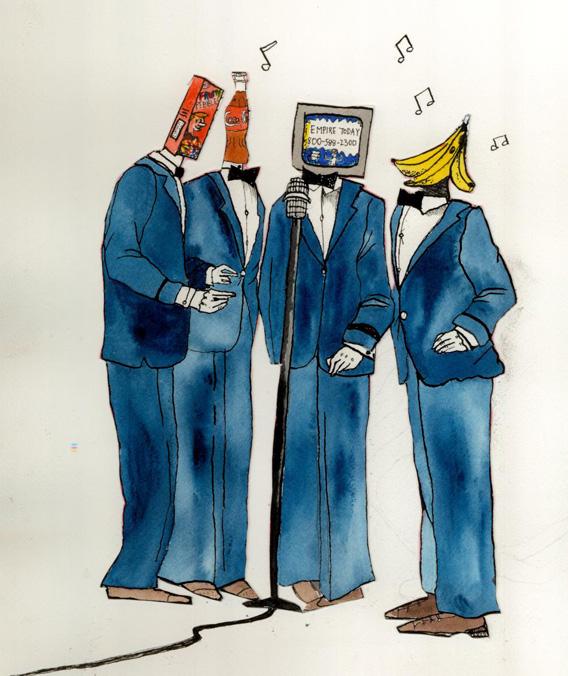
What was your favorite writer like in the the sack? Are you sure you really want to know?
After all, shouldn't you be paying attention to the one-sided feud between Bret Easton Ellis and David Foster Wallace?
Perhaps if Ellis stopped to read one of these love-centric stories, some of that aggression would die down.
Even an episode or two of Reading Rainbow could melt the heart of such a literary Grinch.
Though, I don't think Molly Ringwald's collection of stories, rife with depression, melodrama, and divorce, would be a good fit for the show.
But if a writing career doesn't pan out for her, we hear the jingle-writing business is rather lucrative.
Just make sure to rid yourself of all crutch words before setting your lyrics down.
Because you never know when Philip Roth will pen an angry letter to you, putting you in your place.
And when that happens, you may find yourself as the very definition of a literary failure.
Illustration by Bianca Stone.


Slate just did a great overview of the history of the jingle, to the tune that every generation wants new cool things, and to be told about them in a different way. Which is way true. At a glance, the Fifties were for International Style (although I have no idea how Eames chairs were supposed to be comfortable); Eighties fashions, unfortunately, are making a comeback (but everybody knows those neon colors are retro, notcool, right?); and the Noughties were all about shiny glass and brushed steel, courtesy of Macintosh.
But that’s the past. Let’s talk about the future according to the ones making it all up. Here’s a doubleplusfast overview of big brands and products soon to come!
Soma (Brave New World)
I can rattle off seven brand-name drugs (Prozac, Klonopin, Valium, Vicodin, Advil, Excedrin, Prilosec) faster than I can name the Seven Dwarfs (Dopey, Sleepy, Sneezy, Doc, Grumpy, Happy ... Bashful?), so it’s no surprise that one of the greatest dystopian novels of all time, Brave New World, revolves around the pleasure drug Soma. The stuff sounds pretty strong, and lasts a dangerously long time: “half a gramme for a half-holiday, a gramme for a week-end, two grammes for a trip to the gorgeous East, three for a dark eternity on the moon.” And when characters realize they haven’t got the magic drug, they whine in catchphrases: “A gramme is better than a damn.” Above and beyond all the other possibilities in this list, I'd say Big Pharma is the real future.
Depend Adult Undergarment (the year, not the undergarment; Infinite Jest)
David Foster Wallace had a few hilarious ideas about the near future. In particular, calendar years were to be sponsored by corporations (Year of the Depend Adult Undergarment, Year of the Whopper), and Ian Crouch has considered the real-life twists on this joke. But really, it’s not so strange to imagine that kind of sponsorship becoming normal. People joked about the iPad and female sanitary products, but those quick-witted tweeters were no match for the almighty Apple.
Diet GingerCoke (In Persuasion Nation)
I have a soft spot for George Saunders, in large part because his characters really believe in their brands. In one story, the titular Jon is part of a collective compound that mainlines advertisements from Prudential Life to Honey Grahams (especially LI 34321) and does Assessments for products like Diet GingerCoke. If you’ve got companies raising their own focus groups, you know you’re going to get the best advertisements ever.
ColgatePalmoliveYum!BrandsViacomCredit (Super Sad True Love Story)
Welcome to the not-too-distant future: a world run by conglomerations like GlaxoSmithKline, only with a little bit more “global” and a little less “local.” Our hapless narrator, Lenny Abramov, flies on a UnitedContinentalDeltamerican plane, and ColgatePalmoliveYum!BrandsViacomCredit (don’t forget the exclamation mark) doesn’t even have a focused purpose anymore, except to wield more power than the government. But hey, in Gary Shteyngart's vision future, everybody can rate each other and talk in Netspeak!
Mattel Hoverboards (Back to the Future Part II)
Fine, I know we're talking about books, but I grew up watching Marty McFly hitting 88 miles per hour on that DeLorean, and Back to the Future II was easily my favorite film in the trilogy. When I first saw it — around the time jingles were reduced to the "cannibalization of the pop charts and an endless parade of kitsch," according to Slate — I thought it was super futuristic: 3D ads for Jaws? Gigantic televisions that show multiple channels? And I am definitely psyched to see that the film’s predictions for 2015 are closer to fact than fiction. Still waiting on the Hoverboards, though.
image credit: jeanpaulreparon.blogspot.com


style="margin: 1em 0px; color: rgb(0, 0, 0); font-family: AvenirNextLTW01-Regular; font-size: 14px; letter-spacing: normal; line-height: 20px; ">First, some cold, hard facts.
FACT: A signed first edition of William Burroughs’ Naked Lunch will set you back $2,000 at Powell’s City of Books.
FACT: You can get it in digital format for $10.91, or free if you’re willing to click on some sketchy-looking pdfs.
FACT: I sometimes miss holding things in my hands.
FACT: It’s not an either/or proposition.
Last week I visited Portland, Oregon; naturally, my first stop was Powell’s and its 68,000 square feet of books. While it does have thriving e-book and print-on-demand departments, Powell’s is primarily a living monument to the printed word, a magical place where throngs of readers crowd the aisles in the middle of a weekday.
I had been thinking a lot about the alleged death of print, so I climbed the stairs to the Pearl Room, which houses the rare books. The rare books are kept in a climate-controlled glass enclosure and monitored by a friendly and vigilant employee; the room has more in common with a museum than with the ramshackle chaos of the fiction aisles downstairs.
The attendant and I get to talking, and soon enough I've arrived at several theories about the future of the printed word.
1. A book’s value is not necessarily linked to content, but a book’s value is totally linked to content. Popularity can decrease value because when a book is popular, more copies are printed, and editions become ordinary. The most exciting collectibles work both angles: they surpass popularity and vault into that unique realm we call a “classic” or (machismo intended here) “seminal.” East of Eden versus Eat Pray Love is no contest. However,East of Eden versus the first Harry Potter might get tricky, due to the ever-present wrench of fan obsession. And cover art matters.
2. E-books and e/print hybrids push readers away from collecting because the content is not encased in a physical object; it is always available, always floating in the ether and ready for consumption.
3. At the same time, e-books push us in a more accelerated fashion toward collecting books, because we fetishize the physical object more. When technologies go obsolete, their artifacts become more collectible. The boards and pulp become special. Rare.
4. As publishers get more creative with electronic and hybrid print/electronic packages, what constitutes a “collectible” edition of a given title is unclear.
5. As books change, bookstores will change. Powell’s may become more of a museum and less of a store — an archive, a physical representation of literature. It’s already halfway there: most of the customers I see crowding the entryway are there to buy souvenir tote bags and t-shirts, not books.
6. I don’t think printed books will ever disappear entirely, but they are certainly in the process of losing their popular monopoly. As e-books grow in prominence, used bookstores grow more specialized; independent stores will carry a smaller spectrum of titles geared toward small, dedicated audiences. Like vinyl record stores, bookstores are on their way to becoming boutique retailers, with a customer base made up of aesthetes and collectors. Print freaks.
7. Powell’s has a 1924 edition of Nathaniel Hawthorne’s House of the Seven Gables hand bound by Virginia Woolf. It’s $9,500. When I hold it, even through plastic, I pause. I think about Woolf’s hands holding it. She madethis book. Does that make me want to read it? Not particularly. But it kind of makes me want to take it home and pet it whenever I want.
Images courtesy the author

If brevity is truly the soul of wit, then your Twitter feed is the Algonquin round table of today's digital Dorothy Parkers and Ogden Nashes. Here's our favorite tweets from the week; nominate yours by submitting to @blackballoonpub with #twitwit.



 A Black Balloon Publication ©
