



In art news: Another Ryan Gosling meme, this time for design snobs
And modern artists interpret classic paintings with new technology.
Just hope those artists aren't accused of pulling a Quentin Rowan.
Speaking of sad dudes, check out the literature from the Great Depression.
Though "dude" may or may not be in the new vocabulary for transsexual people.
Meanwhile, Gary Shteyngart and other authors let us sniff around their personal libraries.
And protestors work had to maintain their own libraries, open to the public, of course.
Who will surely be happy to know that sales for locally-grown food are booming.
Which is further proof that us writers have chosen the wrong day job.
Then again, obstacles, whether purposeful or not, have always helped writing ideas flourish.
Just try your best not to make one of them a near-death experience.
How about listening to music instead, and while you're at it, exploring its history?
Or you can always turn to YouTube and watch some inspired infomercial parodies.
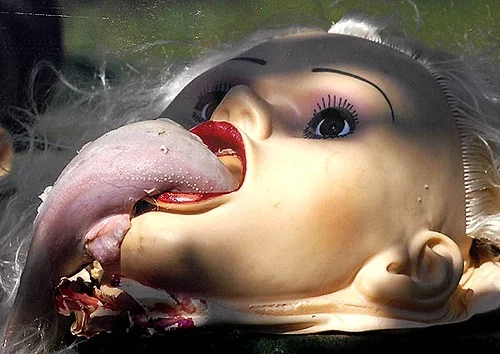

“You got me feeling pussyish, Nedbody," she said, breathily.
"Think with your asshole." She grabbed his dick with one hand, and with her left hand she snookered a finger up his ass, and then she held her mouth still and began a slow, deliberate crescendo, jerking him off into her mouth.
That's Reese, pleasuring a headless but fully sensuous and aroused body (hence, "Nedbody") in Nicholson Baker's latest pornocopia of freaky fucking, House of Holes. In a wet little nutshell, the Vox author's short novel is about an alternative universe where visitors to the titular House (or HoH) can have any and all of their sexual fantasies and fetishes fulfilled. It’s a (heterosexual) sextopia focused entirely on consuming pleasure.
House of Holes is not a work of great fiction, but it is a provocative piece of social criticism: Are we too obsessed with sex, too afraid of loneliness, too ashamed of our most secret desires? It is also entertaining—not in some seedy porno-flick way, but in a slutty orgiastic-comic way. Throughout the novel I was far more amused than aroused.
Highlighted by his vibrant and playful sex-laced vocabulary (“dickitude,” “cockfuckedfulness,” “Kegeling love muscle,” “famished slutslot”), Baker’s work consists of a series of vignettes describing the wormholes through which people arrive at the HoH (found in such places as a dryer, a straw, and a vagina—one is literally “sucked” into the HoH) and what the people do once they’re there.
For example, for men there’s the “International Couch”: a line of women, “from all countries, all ages, all weights,” kneeling “with their asses up” waiting for you to “hump your way right down the line.” Similarly, women can take advantage of a “Squat Line” of reclining and aroused “international dudes.”
There are activities focused on specific fetishes (feet, tits, asses, fruit); a dismembered hand that pleasures women; a tree that grows magical dildos; a Hall of Penises and a Cockstorm Room; and the Porndecahedron: a private IMAX-like cinema where you’re surrounded by porn. There is also a monster composed, like those subway platform newsstands, of nothing but bad porn. Again, House of Holes drives us more toward laughter than masturbation. Sex can be quite silly.
Adding a bit of suspense, there’s the ongoing mystery of and search for the “Pearloiner”: an AWOL ex-TSA agent who has infiltrated the HoH to steal clitorises. Denying pleasure: pretty much the most heinous crime one could commit in the HoH.
Baker’s jism-splashed slutfest celebrates our horniness. But beyond such conspicuous consumption of sex—and each other—there’s still a dirty little remainder: the kinky underbelly of our filthiest, most arousing and amusing desires. The House of Holes exposes the many ways we fuck each other and encourages us to explore our own HoH, so we too can unleash an “Atlas-shrug shudderation of arrival” in which we shiver “through the seven, eight, nine, twelve seconds of worldwide interplanetary flux of orgasmic strobing happy unmatched tired coughing ebbing thrilled spent ecstasy.”
Photo: Gimcrack Hospital

Man, doorstoppers are everywhere right now. Murakami and Stephen King just published novels of about a thousand pages each, and McSweeney’s seems to have launched an imprint called “Rectangulars”; at least, that’s...
Read More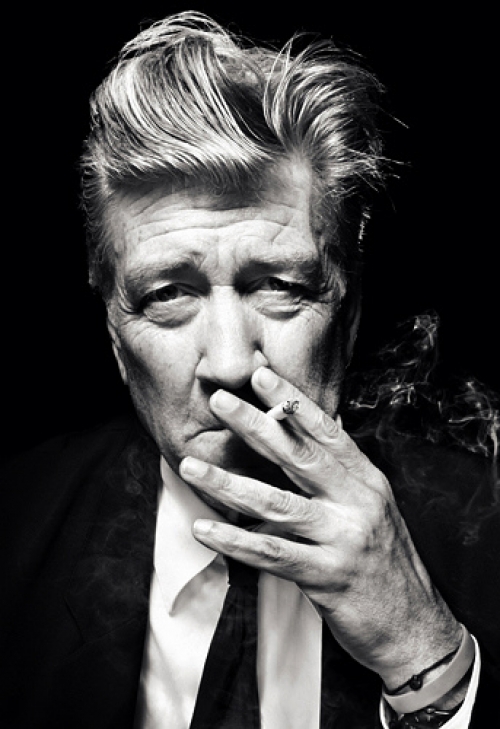

As one who listened to the Twin Peaks soundtrack in her automobile on a regular basis, I can assure you that Crazy Clown Time is an appropriate name for a David Lynch album. I listened to the Twin Peaks soundtrack because it made driving that much more frightening and surreal. It added an air of danger, an air of very real threat to my well-being. Why would you want to feel safe in a car? Especially safe from your own mind? That’s for the unadventurous.
Crazy Clown Time is far less dangerous. Why did he make it? Because why wouldn't he. Also, have you listened to his films? David Lynch has been responsible for putting out a fair amount of awesome in the ear department. Just take a minute to listen to "Pink Room" by Badalamenti (Lynch’s composer for most everything). It's actually very similar to the style and tone of Crazy Clown Time.
I am not a music critic, by the way. For an actual legitimate "review," I suggest going here. I do, however, very much like the sexy drawl, strutting drums, and honky tonkish guitar thing happening throughout a lot of the album. Some of the songs are more upbeat, some more slow, but there’s always a little strut—a little sly smooth sexiness.
But then the vocals. Okay okay, the first track with Karen O is pretty damn awesome. I support that track one hundred percent. What I don’t understand—and where I think the true Lynch comes in to poke me, saying, "Hey, this is a David Lynch album. Not another kind of album but a David Lynch album. Beduh."—is the distortion on the vocals. Sometimes it’s like a whisper, other times it’s like a hyperactive computer child? Then it’s monotone and droney? And the effect, for me, is just goofy as all hell. On the other hand, if it weren’t for the bizarre vocals, the tracks would just be kind of okay, enjoyable songs. And I doubt David Lynch wants to make okay, enjoyable songs.
Also, to be hugely unfair, I’ve become obsessed with the soundtrack to Drive. And the main song I listen to on repeat, "Nightcall" by Kavinsky (featuring CSS's Lovefoxxx), has excellent distortion on vocals! So good. The distortion is perfect and the lyrics are just creepy and ambiguous enough. Listen.
It’s not fair of me, in the midst of my lovefest with the Drive soundtrack, to then listen to poor David—alone, without a film to sing for, without a room to furnish with sound. At least I’m keeping it in the family: Johnny Jewel, the man responsible for the Drive soundtrack, pays homage to Badalamenti in this interview.
As they say in "Nightcall," "I'm going to show you where it's dark, but have no fear."
Photo: sabotagetimes.com


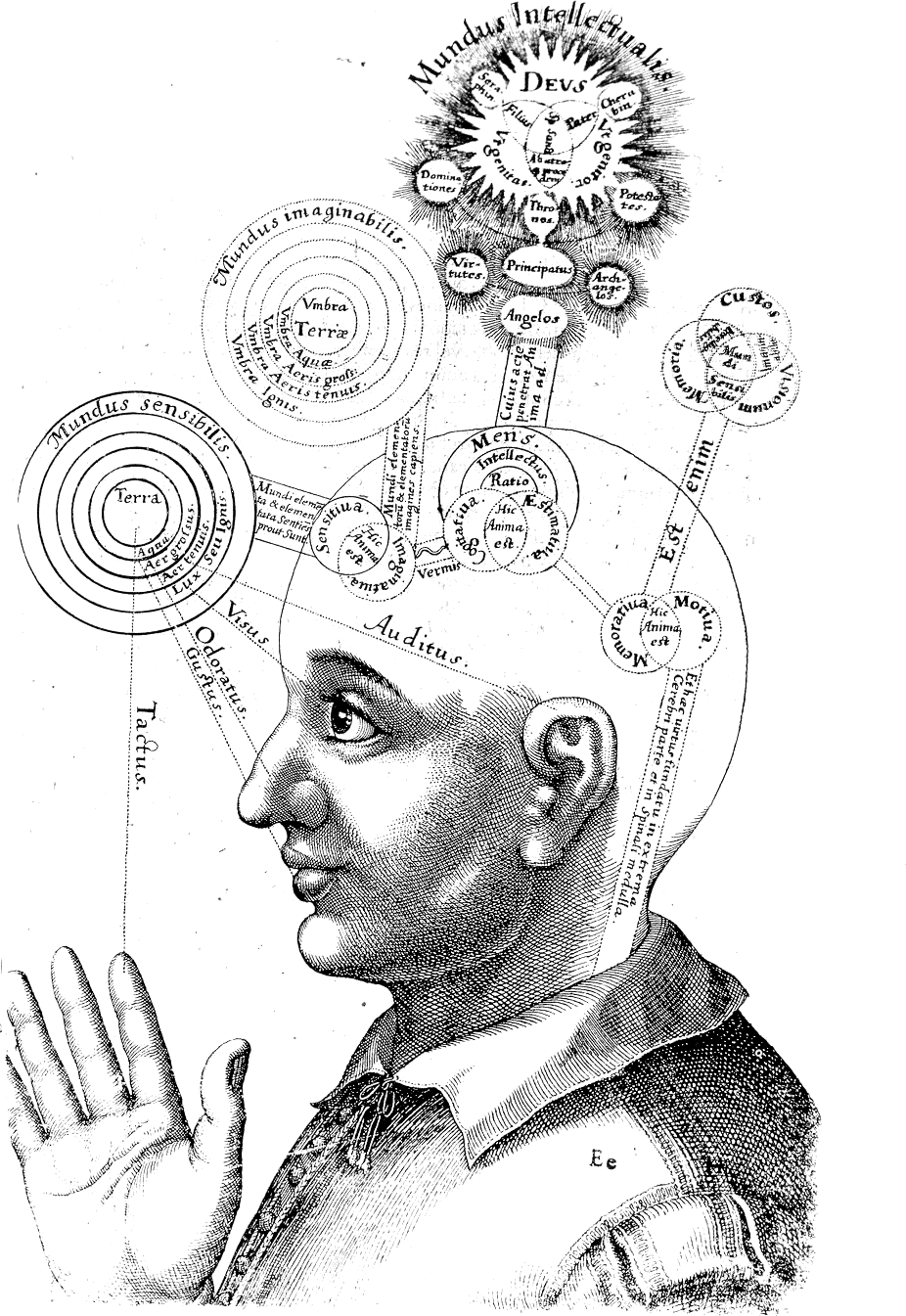
Am I the only one who believes—without hesitation and with no medical knowledge beyond a few Oliver Sacks books—that neurological disorders tell us who we really are? Is anyone else enamored by mind diseases and their relationship to language? Reading through an interview in HarvardMedicine with a neurologist who experiences bouts of hypergraphia (“the medical term for an overpowering desire to write,” as explained in the interview), I suddenly become like a sports fan of the human condition. I cheer and rally. Look at us and how awesomely our brains respond to stress and trauma! Go team!
Alice Flaherty, the neurologist, describes the compulsion as all-encompassing: “That’s all I was conscious of—I had important ideas that I needed to write down because otherwise I would forget them.” What strikes me is her emphasis on documentation, and that the anxiety compelling the act of writing is so entangled with memory. Her hypergraphic writing was not fueled by a desire for self-expression or to engage in communication with others; she wrote so she wouldn't forget.
To me, one of the most fascinating aspects of neurological dysfunction is the idea that they inherently reveal something ancient and essential about human beings. And while no doubt Alice Flaherty’s hypergraphia manifests differently from anyone else’s, is it so outlandish to conclude that writing is a very basic human need? That we are hard-wired not only to form language, but to put that language down in an attempt at preservation? Language can save us!
My monkey brain knows this is true. Putting the words down, the simple everyday act of getting them written, is often what gets us by.
Photo: Rick Friedman for The New York Times

On Sunday, New York was alive with the sound of running
A sport that would come in handy, should you run into any American werewolves
But no matter how much you run, you'll never weigh as much as the Internet.
Meanwhile, Percival Everett's novel satirized racial pigeonholing
While the book, Negropedia asks, What's been keeping us racist?
The answer to that question may or may not lead to some embarrassment.
Five books focus on the mechanics of love
A topic that would make for the beginning of a good novel or story
Either that, or the the discovery of Apple's dealings in China
Andy Rooney surely would've had something to say on the topic.

Two things in common between Michael McKean, aka Spinal Tap’s David St. Hubbins, and David Liebe Hart, the guy with the creepy puppets on Tim and Eric Awesome Show, Great Job!: both are permanently etched on my brain, and both played tiny NYC club shows last month.
Read More
A: This long-running game show has been the subject of an unprecedented three Black Balloon posts.
Q: What is Jeopardy?
Read More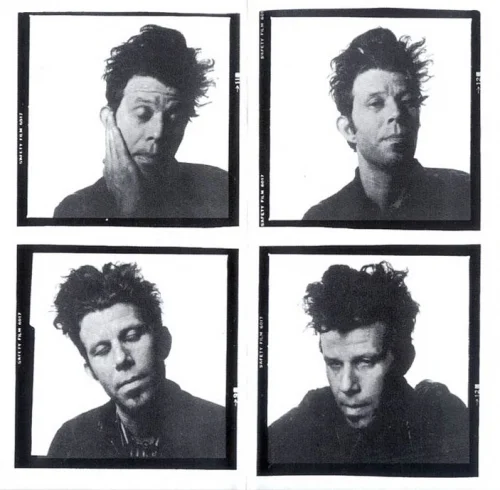

I remember my first Tom Waits song, "Tom Traubert's Blues," like the first time I was racked by a girl in middle school. [Rack: v. To kick or knee one in the balls, in Texas. -ed] Not fondly, but viscerally. His voice ruptured that which I was accustomed to hearing. Unlike the kick to the crotch, however, I wanted more. There was something intimidating, yet soothing, about his raw and caustic soul. The “brawlers, bawlers, and bastards” Waits sings about can haunt you.
Bad As Me is no exception. In many ways a microcosm of Waits’ entire oeuvre, his new album traverses gritty up-tempo train-chugging blues (“Chicago”), Elvis-like swagger (“Get Lost”), barroom bravado (“Bad As Me”), and existential angst (“Last Leaf”). Its varied musical portraits reflect the diverse personas that populate our culture: the ruined life of a recent war vet (“Hell Broke Luce”), addiction (“New Year’s Eve”), and the white noise of domesticity (“Talking At the Same Time”). A gallery of misfits and anti-heroes, all of them desperate, broken, and searching.
“Pay Me,” a song about the misery of an aspiring actress-cum-dancer, is the album's emotional nucleus, pulling together some of its key themes: the quest for, and question of, home; the irony of redemption; fatalism tinged with a fuck-you smirk. The song is starkly furnished with guitars, strings, accordion, and piano, allowing Waits to mourn, his voice hushed and fatigued. As usual, he's a brilliant storyteller:
You know I gave it all up for the stage
They fill my cup up in the cage
It’s nobody’s business but mine when I’m low
To hold yourself up is not a crime here you know
At the end of the world.
Like us, Waits’ characters are full of delusions and contradictions. We simultaneously long for and shun that which is impossible to reach (“home,” for example). In this way, “Pay Me” closes ambiguously, juxtaposing fate and hope.
And though all roads will not lead you home my girl
All roads lead to the end of the world
I sewed a little luck up in the hem of my gown
The only way down from the gallows is to swing.
But in the final coda, resignation is mitigated by that fuck-you smirk: “And I’ll wear boots instead of high heels/And the next stage that I am on it will have wheels.” Nodénouement in a Waits song is ever simple or one-dimensional.
I still find Waits intimidating, his stories haunting. But I’m learning to accept and embrace his brawlers, bawlers, and bastards. After all, these are stories about us.
Photo: For the Sake of the Song
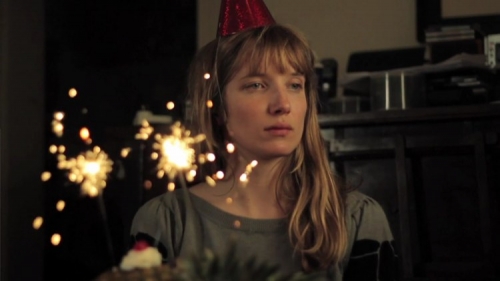
Skwerl, an Australian short film in which gibberish mimics how English might sound to non-English speakers, recently wound up on Gawker and New York Magazine. The film is unremarkable subject-wise: a sort of mumblecore prose poem about an alt-attractive couple and a romantic dinner gone sour. So why did I find myself playing and...
Read More
 A Black Balloon Publication ©