Re-Blogging the Net's New Visual Poetry
December 08, 2011

Kayla's lovely touchy-feely post about our current squeamishness when it comes to internet feelings got me thinking about how just the opposite's en vogue over in the Tumblr World of TeenGirldom. So I put together a list of text/image-confessional sites and had a good think about why they arouse my inner Humbert Humbert.

Read More
Flap Chat: The Stunningly Deep Disturbances of Book Marketing

Why are publishers often so bad at marketing? Daniel Menaker’s piece "Flap Rules" on BarnesandNobleReview.com points out some of the more grating redundancies slapped on recent fiction: always use "stunning," always use "deeply," find a way to work in "best-selling."

But as aggravating and uninformative as these phrases are, things could be worse.

On the back cover of a Freud paperback I recently purchased, I was astounded to read this (I’ve taken out some specifics so that the poor publishers might remain anonymous):

...widely considered to be one of his greatest works of all time. This great work will surely attract a whole new generation of readers who study Sigmund Freud. For many, [book title] is required reading for various courses and curriculums. And for others who simply enjoy reading on human psychology, this gem by Sigmund Freud is highly recommended...would make an ideal gift and it should be a part of everyone’s personal library.

The copy is almost mesmerizing in its continued propulsion of disappointment. This great work is really great. If you study Freud, reading Freud will be required. A gem, highly recommended, an ideal gift. Stripped of any specificity beyond the mention of "human psychology," this paragraph could have been written about Freud or a Rich Dad, Poor Dad title.

I understand that writing book copy must be a chore—not unlike the experience of writing a cover letter for an obscure job opportunity—but could it also be intentionally designed to greet the reader with a kind of anonymous familiarity? That if we read "stunning" and "deeply" enough we will come to desire those books described as "stunning" and "deep"? If these tricks aren’t effective, surely publishers would stop writing copy in this way. Do readers merely skim flaps and back covers waiting for the right words to affirm their choice?

Perhaps my reference to the heinous Freud copy is, in fact, a Freudian slip: perhaps we hark to book flaps for Father's approval.

Image: blogs.yis.ac.jp

Read More
Kurt Vonnegut’s Cartoon Head

With Charles Shield’s new biography of Kurt Vonnegut, And So It Goes, being reviewed all over town, I keep seeing the cartoon Vonnegut head. With each successive viewing, which is of course reminiscent of Vonnegut cartoon head encounters of the past, I become more and more convinced of the appropriateness of the image. Vonnegut has cartoon qualities: the downtrodden acceptance of fate, his unavoidable sentimentality, his common way of speaking for the utilization of common sense. Vonnegut was a bit of a goofnut. But I also see, in the vast proliferation of his image as cartoon, just a sliver of animosity. A certain satisfaction in our ability to put Vonnegut in his place—as a caricature.

One of the major concerns of Shield’s biography is to address the contradictions between Vonnegut’s image and how he was in real life (what pretty all biographies set out to explore, right?), but also to bring to light just how in control of his image Vonnegut really was. Not that Vonnegut was merely playing the fool in order to endear himself to an audience, but that he actively pursued an image that would sell. Which doesn’t fit all that snugly with the image of the good-hearted, simple-minded goofnut.

I’ve always been rather protective of authors’ private lives. I’m inclined not to care about the person but to behold their work. Yet with someone like Vonnegut, whose presence was so adamantly inserted into the page, distinctions between narrator and author, character and autobiography, blur. Should we be alarmed? Do we now have to question the narrator of Slaughterhouse Five as insincere?

Before such madness unfurls us, let me propose something. Reading Vonnegut had an extraordinarily positive effect on me as a teenager. Here was an author ready to tell you the true stupid shit about human beings but who still asks you to be decent. Vonnegut, as simple-seeming as he may have been, attained a kind of nobility to aspire to. As much as the true man may have failed in coinciding with his ideal image, isn’t it still significant that he sought out attempts at decency?

Photo: NYTimes

Read More
These Towering Riffs I Have Shored Against My Ruins
December 06, 2011

A recent night with the all-girl tribute band Lez Zeppelin got me thinking about the many ways bands take on borrowed material. The fact that, in the world of musical tributes, Dirty Projectors and Fleetwood Mac are only a few Kevin Bacons apart makes me glad to be alive.

Read More
Did David Foster Wallace Lie on His Syllabi?
December 05, 2011

"[Y]ou hire a fiction writer to do nonfiction, there's going to be the occasional bit of embellishment.” David Foster Wallace

Last week, Katie Roiphe gushed in Slate about the "rigorous" and "honorable" syllabi from David Foster Wallace's teaching days, currently housed at the Harry Ransom Center at the University of Texas, Austin. Of his 1994 course in Literary Analysis at Illinois State University (which Wallace taught when he was in his early 30s), Roiphe writes, "There is in his syllabus...nothing but rigorous honesty and tireless interrogation."

Read More
Internet Feelings: Embarrassment, Lit Blogs, and the NYC Marathon

There’s been some talk on the internet about being embarrassed to talk on the internet. Htmlgiant has a post about being embarrassed over sharing one writer’s favorite poems in the context of htmlgiant, which spreads to a post on the writer’s personal resistance to participating in the kind of social/group context that htmlgiant inherently is. But htmlgiant is a particular literary online context, in which expressing one’s personal embarrassment is fairly common: there’s a recent post on the humiliation of being a writer, encouraging further confessions of other people’s thoughts on the humiliation of being a writer.

The general form that many literary posts take is one of confession: addressing first the writer’s justifications or apologies for speaking in the first place before moving on to discuss the issue at hand. To an extent, these confessions create a sense of intimacy between reader and writer, but they also tend to make the piece of writing more about the speaker.

Freud said, “...every individual is virtually an enemy of civilization, though civilization is supposed to be an object of universal human interest.” All groups press for the individual to fall in line. There’s no way around it. But there’s also the possibility of greatness in numbers, which I was surprisingly reminded of last month—an abrupt encounter with the New York City Marathon.

To add my own confessional preamble, I might have been in an emotionally delicate state due to my triumphant hangover. Nonetheless, when I rose up from the subway and heard the mass cheering, when I saw the crowd of strangers applauding and whistling for other strangers, I almost started crying. I do not like crowds, and yet here I was, ready to hug and weep with all of them.

Without doubt, a large, public group of strangers calls for very different codes of behavior than an anonymous gathering online. The street doesn't allow us access to every spectator's feelings about being there (only I get to do that). But maybe we could try emulating a similar kind of enthusiasm that lacks this uncomfortable, stilting sense of self-presentation that seems to be plaguing internet reviewers. Maybe we could pretend that the crowd is gathered for a different purpose than staring down whoever speaks.

Really, how hard would it be to inject pure, unabashed celebration into the internet? To simply cheer and gush over that which excites us? 

Photo: rosemis.com

Read More
Google Doodles, Charles Dickens, and Tombs Prison

Tom McCarthy gives us a tour of his surprisingly organized computer desktop

While Keith Gessen gives you a tour of a holding cell in Tombs Prison

And Nigerian novelist, Chris Abani, also has his own prison story

Such an experience would make for "stunning" book flap copy

Something the top 10 books of the decade should know a thing or two about

Perhaps some of those authors will have the honor of their own Google doodle

Or even better, a 200th birthday party at the Morgan Library, a la Charles Dickens

One group of writers that have a hard time being recognized: doctors (due to crappy penmanship)

Meanwhile, there's a new manifesto in honor of the end of manifestos

There should also be one for the centuries-old marriage of literature and beer

And if that leaves you a bit tipsy, use this map to guide you back to your favorite authors

Just make sure to follow the not-so-clear artwork of airplane safety directions

Or better yet, just stay home and think up a fantasy literary cookbook

Photo: The Chemist and Druggist 15 June 1874

Read More
Not Your Grandma's Beethoven: Introducing Ludwig van to the 21st Century

Classical music can be one temperamental bitch.

Take, for example, what recently happened during the London Philharmonic Orchestra’s performance of Anton Bruckner’s Fourth Symphony. One concertgoer (this guy, it turns out) was so disgusted by conductor Osmo Vänskä’s “self-indulgent bad conducting” and the LPO’s “terrible playing” that he stormed out halfway through the performance yelling “Rubbish! ...This is terrible! ... Rubbish!” (Listen for yourself.) Unfazed, Vänskä and the LPO completed the performance without further incident. But try that kind of shit at a Mark Kozelek show and he’ll rip you a new asshole.

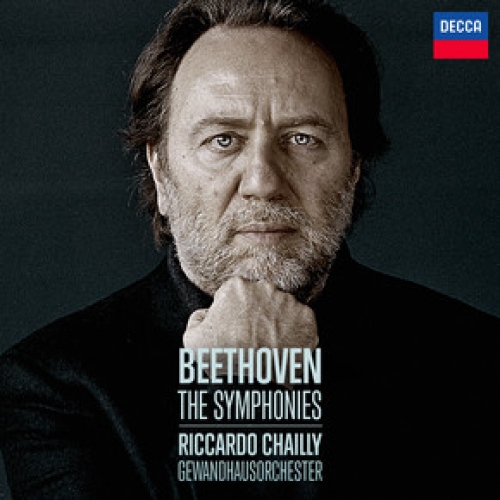
Classical music geeks are famous for their subjective peculiarities. One man’s forte is another man’s mezzo-forte. And there’s certainly no room for compromise—you’re just fucking wrong. Which makes the critical love fest that has followed the release of Riccardo Chailly’s recording of Beethoven’s complete symphonic cycle with Leipzig’s Gewandhaus Orchestra rather shocking. Since becoming music director of the esteemed Gewandhaus Orchestra in 2005, Chailly has solidified his reputation as one of the most accomplished, demanding, and energetic maestros in classical music today—qualities which also helped shape his new Beethoven cycle.

“Superb...joyful...fearless,” beams one critic. “Fresh and bold,” says another.Gramophone magazine, the apotheosis of classical music reviews, boasts that the performances under Chailly’s baton are a “tour de force,” “distinguished,” “electrifying,” and “powerful.” And according to The Guardian, it’s one of “the best modern-orchestra versions of recent times.”

A fan of both Beethoven and Chailly, but no classical music wonk, I can only say that Chailly’s Beethoven cycle is intense and driven, reawakening Beethoven’s music for a new century and the coming-of-age of the Millennial Generation. I also believe it’s something music fans of all stripes should include in their collections. And if Big Boi thinks Kate Bush’s new album is “very, very deep” and “good ride music,” he’ll definitely dig Chailly’s Beethoven.

So here are three simple reasons you, and Big Boi, should check it out.

  • Big sounds. Beethoven’s music marked a decisive break with soothing, soporific chamber music that preceded it. Music was now loud, scandalous, unpredictable. Chailly’s recordings unleash the abrasive spirit of Beethoven’s revolutionary aesthetics. Turn it up.
  • A Clockwork Orange. With Chailly’s galloping take on Beethoven’s Ninth—a true celebration of life—one can finally grasp Alex’s ode to “Ludwig van’s” final symphony in Burgess’ novel: “Oh bliss! Bliss and heaven! Oh, it was gorgeousness and gorgeousity made flesh. It was like a bird of rarest-spun heaven metal or like silvery wine flowing in a spaceship, gravity all nonsense now. As I slooshied, I knew such lovely pictures!” Sure, Alex's "lovely pictures" included a bride dropping from the gallows (in the movie, anyway); like I said, classical is nothing if not subjective.
  • The cover. It’s just fucking cool. Recently, classical labels have been focusing on making covers more alluring to (younger) buyers. Hence the growing popularity of some classical music hotties. While lacking the drool-worthy sex appeal of a Ryan Gosling, Chailly still looks dapper and fierce as hell in the Avedon-style cover photo. Indeed, Chailly commands your attention. He dares you to listen.

So accept Chailly's challenge and discover what radical Romanticism sounds like. 

Image: Gewandhausorchster

Read More