



Following the massacre of 16 Afghanis by an American officer last Sunday, the ubiquitous question in the press seems to hinge on the singularity of the crime. An aberration? A disgusting outrage? Or an inevitable outcome of a war "on" terror? Let's open the history books to test the uniqueness of this type of behavior.
The above photograph, taken in 1919, shows an Indian man obeying Brigadier General Reginald Dyer’s “Crawling Order”—according to which residents of Amritsar were required to crawl (at gunpoint) down a particular street to get to and from their houses. Days later, Dyer ordered the massacre of between 1,000 and 1,500 men, women, and children trapped in a public garden called Jallianwallah Bagh on suspicion of insurgency, and to "teach them a lesson." Writing in the seventh century, a Jain monk asks us to consider whether we may always lose our way and encounter the demoness of time when we set out for another country; whether the sweet drops of a so-called freedom can be justification enough.
1. “After years of war, Mr. Samad…had been reluctant to return to his home in Panjwai, which was known in good times for its grapes and mulberries…It was against this background that, United States officials said, the soldier left the American base and walked south about a mile to Mr. Samad’s village…an elderly woman named Anar Gula, who had been cowering in her home, said she had heard an explosion, screaming and shooting as the soldier broke down the door of Mr. Samad’s house and chased his wife and two other female family members from room to room before he shot them. Two of the women and some of the children had been stabbed, she and other villagers said, and blankets had been laid over them and set alight—to hide the stab wounds, she said.”
—Taimoor Shah and Graham Bowley, New York Times report on the 16 Afghanis murdered by an American Staff Sergeant on Sunday
2. “If an officer justifies his conduct, no matter how gallant his record is—and everybody knows how gallant General Dyer's record is—by saying that there was no question of undue severity, that if his means had been greater the casualties would have been greater, and that the motive was to teach a moral lesson to the whole of the Punjab, I say without hesitation, and I would ask the Committee to contradict me if I am wrong…that it is the doctrine of terrorism. If you agree to that, you justify everything that General Dyer did. Once you are entitled to have regard neither to the intentions nor to the conduct of a particular gathering, and to shoot and to go on shooting, with all the horrors that were here involved, in order to teach somebody else a lesson, you are embarking upon terrorism, to which there is no end.”
—Edwin Samuel Montagu, Secretary of State for India, speaking at theCommons Sitting on July 8th, 1920, following the Jallianwallah Bagh massacre
3. “A certain man, much oppressed by the woes of poverty,
Left his own home, and set out for another country.
He passed through the land, with its villages, cities, and harbors,
And after a few days he lost his way…
[t]here appeared before him a most evil demoness, holding a sharp sword, dreadful in face and form, laughing with loud and shrill laughter…he trembled in all his limbs with deathly fear, and looked in all directions….
[j]ust by chance a drop of honey fell on his head,
Rolled down his brow, and somehow reached his lips,
And gave him a moment’s sweetness.
He longed for other drops…
This parable is powerful to clear minds of those on the way to freedom.
Now hear its sure interpretation…
The drops of Honey are trivial pleasures, terrible at the last.
How can a wise man want them, in the midst of such peril and hardship?”
—“The Man in the Well,” parable from the Jain text The Story of Samaradityakatha; cited from a prose and verse version written in Prakrit byHaribhadra in the seventh century and collected in Sources of Indian Tradition (Introduction to Oriental Civilizations)
Let Me Recite What History Teaches (LMRWHT) is a weekly column that flashes the lavalamp, gaslight, candlelight, campfire, torch, sometimes even the starlight of the past on something that is happening now. The form of the column strives to recover what might be best about the “wide-eyed presentation of mere facts.” Each week you will find here some citational constellation, offered with astonishment and without comment, that can serve as an end in itself, dinner party fodder, or an occasion for further thought or writing. The title is taken from the last line of Stein’s poem “If I Told Him (A Completed Portrait of Picasso)."
Image: National Army Museum [via]


Right now, I am typing in Dvorak, a keyboard layout that places all the vowels in the home row and purports to be more ergonomically friendly. I have been typing this way for a week, but my computer keyboard still feels foreign to me. I cannot believe my fingers are still not dancing across the keys.
I decided to start typing in Dvorak because I wanted to see if anything would change. So what did change?
First was my brain: I could feel the ache immediately. Norman Doidge describes competitive plasticity as a gerrymandering of cerebral territory, which perfectly explains why training my fingers to tap different keys for the same letters would run so palpably contrary to my brain’s heavily automated routines. In his book The Information: A History, A Theory, A Flood, James Gleick discusses how breaking words down into letters "forces the reader to detach information from meaning; to treat words strictly as character strings; to focus abstractly on the configuration of the word." I didn't have to be told twice. I struggled through the first half-hour of typing, and then stopped. My head felt like it might divide in two.
But an hour later, I came back and found myself distinctly remembering where the different letters went. Astonishing. My brain—I could feel my brain mastering this.
Then it was my writing: I had to simplify every part of it. If I was patient and tough, I might break ten words a minute. Gone were all the fillers—eh, nah, well—I’d typed during my Qwerty days. Gone were my slow-spooling, oft-Proustian digressions. Like Beckett switching from English to French, my sentences became plain. The words I chose changed, too. As a recent study has found that QWERTY typists prefer words typed with their right hand. I do prefer words that are easier to type; as David Mitchell mastered vocabularies to work around his stammering, so I found myself similarly picking words to suit my fingers and my mind.
“Our writing equipment takes part in the forming of our thoughts,” declared Nietzsche in 1882, having learned to use a typewriter. I have moved in the opposite direction from Henry James, whose novels swelled in length and obliqueness once he started dictating to his secretary. He was able to postpone the work of editing; I, in my turn, must begin editing before I get a single word down.
I feel like I am writing more clearly now, more carefully and precisely. Typing in Dvorak has made my words strange to me, and so I look at each one closely like a small gemstone before setting it into my text. I won’t pretend that I’m a happier person for having learned to type at a rate far slower than my thoughts, but I know my words have become more exact and honest. My brain has actually been rewired.
Image credit: flickr.com/photos/julianrod

It’s been my lifelong dream to perform inside a six-story Doritos vending machine, but today, at the opening of the SXSW music festival, this is not my fate. Instead, I’m in Long Island City going through scraps from two years ago, when I served as “backline tech” to a British band signed to Atlantic, making their much-hyped US debut.
Read More

I am not always the best listener and I do not always enjoy readings. Oftentimes there are the agitated shoulders, glancing eyes, and requisite hands-holding-drinks-while-pointing gestures of some sort of edgy literary scene. Authors tend to swallow their words or make too much of a self-conscious mess of themselves to be heard clearly. For some reason, I usually feel a need to urinate and spend the reading vaguely uncomfortable and distracted. Last night's Housing Works reading, with Diane Williams, Ben Marcus, and Deb Olin Unferth, was a distinct and delightful departure.
I have to give some credit to Housing Works, an organization that uses all proceeds to help people living with HIV/AIDS. Its bookstore and café are incredibly inviting: tall shelves, plenty of dark wood moldings, thin windows that stretch above the bookcases beside them. It is utterly unpretentious while maintaining a lot of class.
The most credit, however, has to do with how well our three authors read. My love for each of the night's readers is a matter of public record; cf. my posts about The Flame Alphabet and Vicky Swanky is a Beauty. But it had been a long time since I really felt pleasure from hearing a text rather than simply being alone with it. For the most part, I prefer reading alone and am often jarred when an author’s voice doesn’t align with the voice I’ve conjured in my head. And while none of the three authors read in the voice I had imagined, each brought to the text something I hadn’t heard before.
I don’t know how this happens. Surely, our three authors are not amateurs and experience has to have something to do with it. But there was something in their voices, in their presence while reading, that surpassed a person reciting text. They weren’t mere vehicles for words, but they weren’t actors either; there wasn’t an insincere sense of performance. I think what mattered was a sincere investment in the words themselves. A desire, firstly, to bring the sentences forth.
Maybe it was only that Deb Olin Unferth has an adorably high, authoritative voice and then Ben got up there with a really deep voice and spoke measurably slow but bitingly, and then Diane spoke in unpredictable cadences and with grace and movement. Maybe they used these devious tricks in order to delight me. And it worked.
So let's get off our computers. Stop texting or tweeting or scanning or browsing. Go listen.
Image: housingworks.org


I was lucky enough to attend last Wednesday's National Book Critics Circle Finalists’ Reading. Held at The New School’s Tishman Auditorium, free and open to the public, the true intrigue of the night was how the hell they were going to have twenty finalists read without us all killing ourselves or each other. As it turned out, the answer was quite simple: three minute time restraints.
The award ceremony itself was held Thursday, so the winners have been announced, the National Book Critics Circle failing, inevitably, to chose who I considered to be the winners. (Although I don't have a great history for picking winners.) I was, however, duly impressed by a number of finalists who read that night, in addition to not even killing myself. Turns out, having twenty readers read for three minutes, from works in six different categories, is actually kind of great.
John Jeremiah Sullivan (a finalist in nonfiction) has gotten some press for his collection of essays, Pulphead, but I didn’t expect to be reading 217 pages of it in one sitting this afternoon. He was the first reader of the evening and it was a fantastic start. I sat up straighter listening to his prose. I’m only taking a break from it to write this, which I do so reluctantly, because I’d like to go back to reading Pulphead.
My favorite in the criticism category was Dubravka Ugresic, who is Croatian and therefore my automatic favorite because I love all Eastern Europeans and Russians and Polacks—really anyone remotely Slavic. I concede to them all authority in terms of the truth about the human soul. This woman was talking about masking death with karaoke. Winner.
My impression of biography was that I didn’t think it was all that kosher to claim an omniscient narrator as a biographer, but I guess biographers just go ahead and say their subject’s thoughts and feelings all the time.
Autobiography was great: Luis J. Rodriguez got up and read for three minutes about his failing, pedophile father, and then Deb Olin Unferthhad to get up on stage right after him and be funny—and she did it!
I can’t talk about the poetry or fiction finalists because I am very personal friends with the clear winners in those—more important—categories.
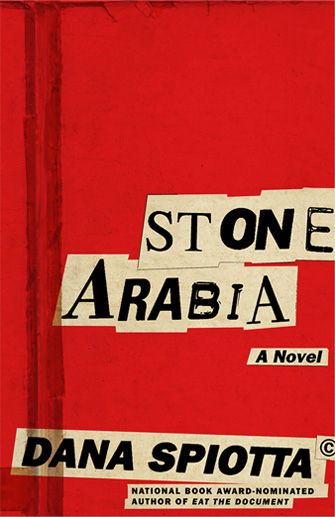

The best prize that I took home that evening (besides my friend leaving behind his copy of Pulphead at the bar, thereby allowing me to take it home and spend my whole day reading it) was hearing so many different kinds of writing all in one place, all being celebrated. Yes, three minute intervals, but everyone. Even biography.
images: iopoetry.org and danaspiotta.com

My band is not going to SXSW this year; no beer-glazed Torche matinees for me, no super-secret sets by this young up-and-comer. So I'm going through the diaries I kept the two years I have participated in the shitshow. The first one goes back six years, when a rock band I was in trekked endlessly from our motel to 6th Street, debated whether to see Goldfrapp or Blowfly,...
Read More

What will J.K. Rowling's "adult" novel be about? Harry Potter and the Reverse Mortgage?
It will probably be tamer than Dr. Seuss's book of nudes though.
Speaking of being a fancy shmancy grown up, Whole Foods is finally coming to Brooklyn.
Somewhat related: you may want to brush up on the origin of the word "douche."
In fact, why don't you just read Shel Silverstein's entire alphabet of adult-related words.
But if that's not your scene, perhaps you'd be interested in the MTA's upcoming garage sale.
And in other antiquated things: gender-based bias in literary magazines still exist.
If only there was a fairy tale ending for all of this.


Inspired by the five hundred fairytales recently discovered in Germany (reported here in the Guardian), I thought it might be fun to take a modern-day tale and twist it, just a smidge, to reflect their style. Erika Eichenseer, the researcher responsible for unearthing the lost German tales, calls them “unadorned” and says “there is no romanticizing.” Fairytales without adornment? Plainspoken fables? I think I know what that sounds like.
Little Red Riding Prostitute
There was once a slut going to college in this wacky town that allowed women to go to college, even though sluts like her only wanted to have a lot of sex. This slut wanted sex so badly, she even wanted the American people to pay for it. Anyhow, one day, her fairy godfather suggested she put an aspirin in between her knees so she wouldn’t have to drag everyone else down with her embarrassing and immoral medical malarkey.
A monster appeared to her and she got all scared and pricked her finger, which happens a lot, I guess. After pricking her finger she fell into a deep sleep and had a dream. In the dream her fairy godfather ate snickerdoodles and watched television while elves bathed together—sinfully. The slut didn’t really know what this dream meant, but she went ahead and followed her fairy godfather’s advice about the aspirin because her fairy godfather influenced lawmakers. After like, two hours she got a wicked cramp and had to go walk it off. Then she got pregnant. Nobody’s paying for that damn bleeding finger, either. Bitch better not need stitches.
Oh dear. Is it time for an apology? Have my advertisers pulled all their spots from my program? The whole point of fairytales are that they in some way instruct people on how to live; or, to paraphrase Eichenseer, the stories are focused on what it means to become an adult. Fairytales provide more than just fantasy. I think a few of our politicians and pundits would be well-served to read some.
Image:trashionista.com


The show Toddlers and Tiaras, now in its fourth season on The Learning Channel, has caused some interesting gender and class policing lately, including a humiliating episode for the mothers on Anderson Cooper’s talk show. As the famous toddler Mackenzie Myers has put it, “I can never just be myselffffffffffffffff.” A radical take on the unending project of gender performance? A comment on the fall of monarchial forms of rule? A goblet whose reflection schizzes us even as we occupy the center of our own portrait?
“A child is a child you might say and if the lense [sic] through which a child is being looked at is not broken, then there’s nothing bad in what is just a huge dress-up game. Unfortunately, this is just a cognitive distortion called rationalization, through which you find a reason that somehow justifies an action, thought or behavior that is actually “not right.” And this beautiful lie gets you just as much as it gets the child.”
–Psychologist Lucia Grosaru on the perils of Child Beauty Pageants,Toddlers and Tiaras, 2011.
“The princess is standing upright in the centre of a St Andrew’s cross, which is revolving around her with its eddies of courtiers, maids of honour, animals, and fools. But this pivoting movement is frozen. Frozen by a spectacle that would be absolutely invisible if those same characters, suddenly motionless, were not offering us, as though in the hollow of a goblet, the possibility of seeing in the depths of a mirror the unforeseen double of what they are observing. In depth, it is the princess who is superimposed on the mirror…”
–Michel Foucault, “Las Meninas,” a reading of Diego Velázquez's painting "Las Meninas" in The Order of Things, 1966.
“She had betrayed no distaste for the game. The other girls crowded to see his defeat, to see his idiot’s composure dissolve, and then rushed to wipe themselves clean of his ejaculation…Every Midsummer morning, Mother woke her before dawn and ordered her to kneel down and bathe her face in the dew; it ensures a year’s worth of loveliness, she explained. As a child, Mother had performed the same ritual. When Madeleine wiped M. Jouy off her hands, she left glistening mollusk trails in the underbrush.”
–Sarah Shun-lien Bynum, Madeleine is Sleeping, National Book Award Finalist, 2004. Bynum based her dream-like novel on an episode in Foucault's History of Sexuality.
Let Me Recite What History Teaches (LMRWHT) is a weekly column that flashes the lavalamp, gaslight, candlelight, campfire, torch, sometimes even the starlight of the past on something that is happening now. The form of the column strives to recover what might be best about the “wide-eyed presentation of mere facts.” Each week you will find here some citational constellation, offered with astonishment and without comment, that can serve as an end in itself, dinner party fodder, or an occasion for further thought or writing. The title is taken from the last line of Stein’s poem “If I Told Him (A Completed Portrait of Picasso)."
Image: Las Meninas, Diego Velázquez
At an AWP panel last year, I heard a prominent writer, hidden in an audience of non-prominents, ask an editor on the panel how many literary fiction writers were able to make a living off their craft. The editor thought for a second before giving a figure so depressingly low, with such chilling authority, that it elicited a collective groan-sigh from the audience.
Read More

 A Black Balloon Publication ©
