Siri Goes on Safari!

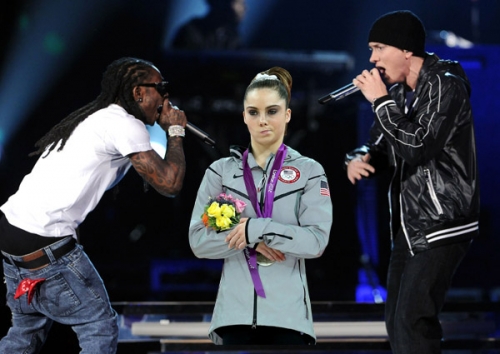
It's mid-August, aka prime vacation time, so we at Black Balloon decided to let our beloved Siri roam free. Here are her latest dispatches from Johannesburg, South Africa!

The safari truck is waiting and the air is cold; the August chill awaits Siri and her cohort of American onlookers. Once they board, they look out at the broad, rutted road leading away from Johannesburg and toward the velds.

Through light and shadow the truck travels on. As the lounging animals of the safari park come into view, the oohs and aahs of the group grow louder, and slowly fade away.

After its off-course trip away from lions and ravenous, red-clawed nature, the safari truck and its tight-knit fellowship of riders find themselves in an unrecognizable veld not far from Thohoyandou. As men working nearby come into view, the truck stops. 

Unable to talk to their compatriots in Hausa, Afrikaans, or Xhosa, Siri is called upon for help by her kindred safari-goers.

The grasses part as the safari truck and its grizzled driver make their way toward, they hope, some sign of civilization. They pass a few gazelles and insist that Siri help them orientate themselves. In the distance, a battered truck full of armed men bounces towards them, sending up a trail of dust as the safari-goers watch with increasing alarm.

[Co-written by Anjuli with help from ifakesiri.com]

image: kellyjstoner.wordpress.com, with Anjuli's iPhone photoshopped in.

Read More

A bit of advice: always return borrowed books, unless you want to be threatened to a sword duel.

Then again, that kind of incident would make for a good Stephen King sequel, if you replace the sword with a killer dog.

When you're writing the manuscript, just make sure Auto-Correct doesn't replace "dog" with "blog."

But a killer blog? That would make for quite a difficult book, and those kind of things are highly praised these days.

You may even get a blurb from Gary Shteyngart if it's quirky enough.

Who knows? It could be adapted into a movie, and next thing you know, you're beating out Vertigo for greatest film of all time.

So knock back a glass of whiskey and start writing. Or reading. Either one goes hand-in-hand with the right booze.

Read More
Pint With Your Paperback?

Since I came of legal drinking age, I've been bringing books to bars. I pair literature with libations at home (whisky, usually, with or without the “e”), so why not do the same at my local watering hole? Trust in some shrill Yelpers to question the practice“Why are people sitting at bars reading books??? It's not a library...I know Bukowski is cool, but I'm sure he had no part of this kind of debauchery.” Love it or hate it, the recently opened Molasses Books in Bushwick is bringing these two hobbies/passions/addictions closer than ever, offering tipples and tomes under one roof.

Its liquor license is still in the works, but Molasses and fellow newcomer Human Relations (a short trek up Knickerbocker Ave) have advantageous locales. Bars and art pair well in Bushwick, and I think books will, too.

Now, I understand this goes against the grain of bar dynamics. Inhibitions drop as intoxication increases, people start chatting and—sometimes—stuff happens. I engage my mingle-mode at gallery openings, and I'm not totally aloof at bars, either. This is why my preferred joints for focused reading are dives.

Take the now-shuttered Mars Bar. Despite its sticky surfaces and dodgy characters, everyone kept to themselves, hunched over their spirits of choice. While Mars Bar didn't boast a wall of whiskeys, if you ordered a shot of Jack Daniels, you received an overflowing tumbler of it. Since I was going to be there awhile, I could make major progress in brick-sized books, like Neal Stephenson's historical sci-fi behemoth The Baroque Cycle.

I take a cue from Haruki Murakami's everymen (sometimes only dubbedboku, i.e. “I/me” in the masculine sense) who hemorrhage hours in bars. Often, they arrive with an armload of Kinokuniya purchases, like Tengo in1Q84 or the sleuthy narrator of Hard-Boiled Wonderland and the End of the World. Nobody questions why they read in bars; it's just second nature. So when I meet friends for dinner in the East Village, I typically hit basement sake saloon Decibel first, ducking into the narrow bar with whatever novel I scored from St. Marks Bookshop down the block. Nursing chilled shochu, I'd study my grammar handouts from the Japan Society and, on occasion, try impressing the female barstaff with just-learned vocabulary.

This is why I avoid reading in Tokyo bars: chatting with barmates affords excellent Japanese conversation practice. Plus my abilities improve after I've had a few. My preference for ultra-tiny Golden Gai dives and immersive fetish bars sorta distract from the prose, anyway.

Lorin Stein, The Paris Review's editor, proudly brings books to bars, though his hangouts have changed after favorites faced renovations. My book-friendly biker bar Lovejoys in Austin, TX, recently tapped its final draft. Lovejoys also attracted tattooed, Bettie Page lookalikes, so I admittedly didmingle there.

While I search for my next haunt, paperback in hand, I ask you: are you a bar reader? Does a particular book entice you toward a bit of boozing? All experiences and inspirations welcome, and the first round's on me.

Image: The Gents Place

Read More
Sad Eyed Lehrer of the Lowlands

Of course we all have to acknowledge how incredibly sad it is that the beloved brainchild of the brain, Jonah Lehrer, has gone down. Not only has he packed up his New Yorker blog, but his publisher, Houghton Mifflin Harcourt, has pulled his top-selling book, Imagine: How Creativity Works. All because he self-plagiarized and made up some Bob Dylan quotes.

First, can we acknowledge, in addition to the incredible sadness, how morbidly funny this situation is? I mean, really. Imagine? How Creativity Works? Well, it works by making stuff up. Plus, creativity helps to take original ideas out of context or combine disparate ideas that had nothing to do with one another. That’s fucking imagination. Second, can we imagine, just for a moment, the lengths to which Lehrer’s own personal imagination must have gone in order to even desire pulling off such a ridiculous (and probably unnecessary) deception?

I don’t have a degree in neuroscience, so I can’t begin to explain whatever logical or evolutionary brain systems were responsible for Lehrer’s many missteps. But I do have a healthy imagination, so I’d like to propose a few made-up justifications for Lehrer’s choices. (For a rundown of those choices, check out this article in Tablet.)

Reason #1

He’s actually into psychology and wants neuroscience, as a hip intellectual phenomenon, to fail

In the raging battle fought between sciences for popularity—a vicious, cutthroat, and often violent battle—accuracy and peer-reviewed precision are daggers the scientists use to kill each other’s dreams of maybe being read one day. For Lehrer to so blatantly flout the basic tenets of science changes the conversation from science to feelings. Shame, doubt, disappointment...the interest now is not how fun our brains are but how messed up and totally incomprehensible they are.

Reason #2:

He believed himself to be beyond reproach

In other words, he’s got gigantic, delusional balls. Of the gazillion people who are huge fans of Bob Dylan, approximately half have devoted their lives to studying and memorizing everything the man has ever said. How could Lehrer think no one would notice discrepancies? Also, and this is just a hunch, as I haven’t had the chance to read Imagine, but were the fabricated quotes even necessary to prove his arguments? I sincerely doubt the neuroscience of creativity lives or dies based on the lyrics to "Like a Rolling Stone." I'd also like to thank the New York Times for pointing out that Dylan himself likes to keep his facts slippery. Which either means A) Lehrer's mirroring Dylan but just didn't know how to explain the joke to the rest of us, or B) see "delusional balls."

Reason #3:

He secretly hates Bob Dylan

...and is ragingly jealous that, even with his mind-blowingly hot career, he will still never be as cool as Dylan. Let’s say little Lehrer is at the kitchen table working studiously on some homework while mom has Blonde on Blonde playing in the background. Lehrer tries to show her how his genius kid mind just did something awesome but she’s a little busy singing along to “Absolutely Sweet Marie.” Lehrer launches further into his studies in hopes of one day gaining recognition and becomes super famous neuroscience man, not only succeeding academically but making neuroscience fucking hip. But who will always be hipper than neuroscientists? Rock stars. And as much as Lehrer has utilized science to show us some awesome and true things about humanity, Dylan kinda also already showed us a shit-ton of awesome and true things about humanity. And Dylan didn’t need a degree or science or anything else to do it.

I do think there's an opportunity here for us to acknowledge the fallibility of human beings and get all warm and fuzzy about how all of us fuck up all the time. But what I'd prefer to take away from the whole affair is this: artists are better than scientists, both ethically and as conduits of truth. Bob Dylan uses storytelling and fabrication in order to reach certain truths that never relied on the facts of the matter, but which ring true in people's hearts anyway. Lehrer's entire body of work relies on facts building on top of one another to establish a particular reassurance of truth. Artists work at bringing about new truths from what never existed before. Scientists have a different kind of task, one that must reveal the truth of that which already exists.

The great tragedy, I think (among the many small tragedies here), is that Lehrer could've probably come up with much better untrue things to say.

image: bobdylan.com

Read More
DARPA Reads Your Mind

Until the computers take over and start making all the decisions (thanks to James Cameron, we know how that ends), military analysts have a keen problem: too much data. Everything, from digital phone records to constantly updated satellite imagery, must be sifted, interpreted and employed by the intelligence services to make Very Important Decisions. Managing all this data has been an insurmountible task, but time, it rolls along, giving us shinier gadgets and sleeker iPhones. And according to a recent article in the Chronicle of Higher Education, the Defense Advanced Research Projects Agency (DARPA) just might have come up with a solution.

Essentially, neuroscientists have devised a computer system that tracks the brain activity of analysts as they follow visual stimuli; there is a measurable spike whenever they respond to a scene or an image that seems to contain information. So, analysts wired up to electrodes will have as many as 20 images per second flit before their eyes, and a computer keeps track of the ones that excite their brain with tantalizations of possible meaning. The system isn't fully automated—it's piggybacking on the analysts' ability to discern sense from dross—but it greatly compresses the amount of time needed to needle-hunt in haystacks of visual data.

There are several interesting aspects to this technology, if you can get past the fact that it's being used to more efficiently direct military decisions. The main one, I think, is that it relies on latent capacities of the individuals whose heads are being scanned. There is no way to externalize the sense-finding capability of human sight (yet), but by scanning the way in which seasoned analysts passively respond to stimuli, the DARPA project makes visible what would seem to be an invisible part of our habitual, reflexive interpretation of reality. Because the snap of recognition that information might be present—it occurs about 300 milliseconds after a stimulus appears—passes so rapidly, a person's conscious inclinations or beliefs do not enter into the situation.

Which of course makes you wonder whether this tech could be used to reveal our most cherished, and unvocalized, assumptions about the world. Hitch somebody to the rig, flash a series of images in front of their eyes, and measure their response: you could find out if they can discern script from chickenscratch, what sort of body ellicits the most excitement, and probably whether they harbor prejudice toward specific types of person. The hidden aspects, the habituated, reality-informing reflexes that incline our minds to see this or that as a bearer of significance, could be teased out, investigated, and responded to.

The military probably won't be very interested in these personal DARP-lications, except maybe in determining which circle of hell to condemn folks to at a black site. But, just as Big Dog gave us Roomba, you can expect cortex-scanning products to trickle down into consumer markets. In the Chronicle article, they postulate a catalog you don't even read: there's merely a flit of images, and the computer lets you know what struck your fancy.

In the future, you won't even have to admit your own desires to have them gratified.

Image: Qubik Design

Read More
Wikibots Don't Like Your Dick Jokes

Wikipedia, the scourge of teachers who still give writing assignments (as if students still had a chance of becoming literate), cannot rely solely on the blood, sweat, and wikitears of its editors alone. There's simply too much content: as of now, that'd be over four million articles in English alone, plus at least as many in other languages. The English edition, if you printed and bound it, would fill almost nine library shelves. So, according to a recent BBC News Magazine article, the Internet encyclopedia now runs with the help of bots.

Essentially, the bots have to be used because of the logistical massiveness of the encyclopedia. Its contents can be edited by all the people who read it—which means, if you think about it, they should be as tagged, graffed, and marked up as the stalls in your favorite dive bar: FREE ART DEGREES, DREAMERS should be written next to every figurative roll of toilet paper on every page of Wikipedia, right? Somehow, it's not.

The relative cleanliness of Wikipedia is due in large part to the bots—armies of them lurking behind the scenes, looking out for changes to articles that are irrelevant or offensive. Gone are the days when you could squeeze "phuque" into your hometown's demographic chart or kill a lunchbreak by putting dick jokes into Anthony Weiner's page, and gone are the days when you could put the name of your arch nemesis on the list of prominent war criminals. So much for those shitzingigz.

Of course, Wikimedia stresses the fact that the bots are not calling all the shots, and that human editors are necessary to retain the polish—such as it is—of the site. And you might think that that is going to be the case for a while. Except you're probably wrong. Bots are already writing effective articles, covering things that no human would really want to write about. Like little league games.

Once the robowriters start breaking into a more general writing field—I'm guessing that romance and thriller genres will be the first to see commercially viable, algorithmically generated content—the literary landscape will change at an even more rapid pace. You thought eBooks were the end of novels? Wait till a bot compiles a narrative specifically honed on your Amazon buying habits.

In response to this technological marvel, writers will probably become more formally experimental, seeking to convey in ways that escape conventional tropes. (Yay. For. Poetry.) And their audience will probably take renewed pleasure in standing in the same room with them, knowing that the words they savor are the work of a fleshy primate. (Hasta la vista, mass-culture.)

Image: but does it float

Read More
Junk Food, Junk Books

Walking into the Strand yesterday, I made my way past teetering stacks ofFifty Shades of Grey and every possible combination of the Hunger Gamesbooks. Then I stopped.

Back up: There’s a reason everybody’s reading these books, right? Should I be so quick to write them off as “junk books”? Are they any better for you than a Crunch bar?

The New York Times reviewed airplane lit at the beginning of this summer. Arther Krystal discussed “guilty reading” at The New Yorker. And although James Patterson and John Grisham are on the bestseller list, they’re jockeying with Gillian Flynn’s Gone Girl and Jess Walter’s Beautiful Ruins. But really, why are people still reading dime-store books?

Because those authors are just as smart as the analysts at Frito-Lay.

I don’t think The Hunger Games is as brilliant or as likely to endure as The Giver or 1984, but I knew from the first sentence (“When I wake up, the other side of the bed is cold”) that it was well-crafted and carefully designed to keep its readers hooked. Otherwise I wouldn’t have read all three books, in 24 hours, and felt exhausted at the end. But, just two months after reading that trilogy, I can barely remember what the Quarter Quell is. In contrast, my roommate just finished reading Dr. Zhivago and huge chunks of the book came back to me unexpectedly, even though I hadn’t thought about it in four years.

So why did I remember Yuri Zhivago better than Katniss Everdeen? Think of it this way: we barely register the experience or feeling of breathing unless we’re struggling to stay abovewater. There’s something to unpack in both commercial fiction and literary fiction, but the latter category is intentionally designed to be more complex, more mentally taxing, and consequently more memorable. It's not that literary fiction (which, let’s face it, is another genre of fiction) is inherently better or cleverer than thrillers or sci-fi—only designed to be better savored, remembered, and appreciated by critics, teachers, and analytical readers.

Which is why, even if I’m just reading for fun, I can’t shake off a feeling of, well, sloppiness or formulaic writing in popular or genre fiction. If the dime novels from a hundred years ago feel cliché, it’s because they were: the readers just mistook the cliché for the fashionable. In the same way, Lee Childs and Robert Ludlum won’t survive fifty years without becoming archaic, even if they're great pageturners now. But I read PD James and Stephen King, because they make a conscious attempt to push the boundaries of their genres; they’ve moved past the clichés to the larger concerns of our own time. The Children of Men has something important to say about how people will live on an overpopulated Earth, while The Standgoes into the marrow of living in a post-apocalyptic world.

Books, like food, don’t always fit into neat categories. “Junk food” isn’t always junk. It still provides something for your body, just not necessarily the most beneficial or long-lasting things. The critic Michael Dirda was a little more diplomatic when he said on Reddit that “Sometimes you want to climb Mt. Everest; sometimes you just want to take a stroll in the park.” If McDonald’s regulars can also like apples and even salads, then maybe the weary travelers at the airport reading A Game of Thrones can read The Once and Future King next, and then really go medieval with Beowulf.

 And hey, that wouldn’t be a bad thing.

image credit: infoglobi.com

Read More
"Cloud Atlas" & the Audacity of Adaptation

Fantasy bibliophiles and lovers of lush cinema are facing acute overstimulation via the epic-length Cloud Atlas trailer, which surfaced last week. Even attempting to translate David Mitchell's award-winning book—its interlocking stories, its sprawling landscapes—into a standalone production is crazy ambitious. But considering co-director Tom Tykwertackled the unfilmable Perfume: The Story of a Murderer and the Wachowskis wrote the solid screenplay to V for Vendetta, I think we're in for something special.

Were there a “Most Daunting and Badass Literature-to-Film Adaptations” award, I'd vote for David Cronenberg. He practically defined “body horror,” but Cronenberg balanced gore with ballsy, bookish films like Naked Lunch and J.G. Ballard's paraphilic voyage Crash. His adaptation of Don DeLillo's Cosmopolis (young multimillionaire/recovering vampire cruising across Manhattan via limo for a haircut) premiered at Cannes 2012. Should Hollywood ever consider another go at James Joyce's Ulysses, Cronenberg's the one to helm it.

The nine-plus hours of Hobbit-sized heroism igniting Peter Jackson's Lord of the Rings films deserve even the most elf-averse filmgoer's respect. Now that Jackson has confirmed that The Hobbit prequel will indeed grow by half, his Rings legacy usurps Scott Pilgrim vs the World's cheeky tagline: “an epic of epic epicness.”

On the flipside, there's Philip K. Dick. His sociopolitical sci-fi sired a succession of big-screen adaptations, ranging from the superlative (Ridley Scott's Blade Runner, based on Dick's 1968 novel Do Androids Dream of Electric Sheep? and backed by the author) to the splashy (Paul Verhoeven'sTotal Recall, née “We Can Remember It for You Wholesale”, and its unnecessary remake) to the wildly aberrant (Minority ReportThe Adjustment Bureau).

Here we have the double-edged sword, for what appears compelling on page could become a cinematic shitshow. Minority Report's steroidal action obscured the original story's metaphysical elegance, and though I was stoked as a kid to see a live-action version of Masters of the Universe, Gary Goddard's goofy result epitomized '80s schlock-cinema. That Jon M. “Step Up 3D” Chu is plotting a He-Man reboot does not bode well.

Sci-fi literature is particularly rife with “unfilmable” gems. I doubt William Gibson's seminal cyberpunk classic Neuromancer will ever make it to the big screen, though Vincenzo Natali has been pursuing the project for eons. Neal Stephenson's Snow Crash—a decade younger than Neuromancer and a billion times more irreverent—is equally enticing and elusive, in its mix ofronin action, virtual reality, and cryptic archaeology. It's telling that Natali considers Snow Crash unadaptable as a commercial film.

Should Cloud Atlas' emotional takeaway not equal its gorgeous visuals, Ang Lee's adaptation of Yann Martel's fantasy-adventure quest Life of Pi will be waiting. This fall's cinematic options are looking truly sublime.


Main image via Badass Digest and Wikipedia, photo-chopped by the author; LOTR montage via LOTR Wikia; Blade Runner via Ghost Radio

Read More